Showing posts with label hope. Show all posts

Sunday, August 7, 2022

Stars and Bars: Sermon for Proper 14C


This weekend, we celebrate the baptism of young Will Ross, the infant son of Sean and Cary, baby brother of Elliott. Baptism is a time of great joy, a time of commitment, of expanding the circle of the community, of welcoming the newest member of the Body of Christ into a life of joy, love, worship, and compassionate service as a disciple of Jesus. Alongside Will and his family and godparents, we commit ourselves once again to renewing our commitment not just to Christ but to each other and to the Ross family. It’s a glorious time of new beginning and of celebrating not just a new life, but the hope, joy, and beauty we image for him and his beloveds throughout his life, and for all his beloveds.

It is, indeed, a glorious time for new beginnings, a time of wonder.

God knows many of us need a good dose of wonder and amazement to bring us light and life. Wonder and amazement helps us see beyond the stresses and distractions that can cause us to forget our belovedness, our rootedness in the kin-dom of God.

We DO live in a time of wonders, after all. Just a couple of weeks ago, on July 11, the James Webb Space Telescope transmitted its first pictures back from Earth from its own spot orbiting the Sun 930,000 miles from Earth. One of the first images it transmitted was of a cloudy area known as “The Cosmic Cliffs” in the Carina Nebula. (1)

The image is dotted with spectacular six-pointed stars against a midnight blue and black backdrop. A gossamer curtain of red, orange, and rust colored clouds hangs across the bottom 2/3 of the image, and hundreds of stars of various sizes shine out of and through the veil. The image practically pulsates with light and life, giving the appearance of movement. And indeed, this is a place where, even better than in Hollywood, stars are born. This area is a veritable star nursery out on the edge of our own Milky Way galaxy about 7600 light-years from Earth.

This incredible photograph immediately brought to mind one of my favorite paintings—The Starry Night, painted by Vincent Van Gogh in 1888. Van Gogh painted this painting in the small town of Saint-Remy de Provence while housed in an asylum there. The sky was the one visible from his east window. He then added a cypress tree on the left edge of the painting, and part of the town only visible from another perspective to anchor the lower part of the painting. And of course, over the town, the stars and the moon pulse and vibrate with a vitality that draws the viewer’s eye directly into painting.

Apparently, I am not the only person who associated these two images in my mind, because someone has actually taken the painting and the image from the telescope and superimposed them upon each other. The result is astonishing. (2)

And come to find out, scientists agree that Van Gogh’s iconic masterpiece, from a period of personal turbulence in his life, also reflects the turbulence of molecular clouds like that in the Carina Nebula, the churning birthplaces of stars. And so, for the first time ever, I am about to quote from Physics magazine in a sermon. As they recount it:


A student at the Australian National University, Canberra, [James] Beattie studies the structure and dynamics of molecular clouds—the birthplaces of stars—whose churning eddies often make him think of the Dutch painting. He recently put that resemblance to the test with help from Neco Kriel, a student at Queensland University of Technology in Australia. Using techniques developed to analyze the patterns of simulated molecular clouds, the duo compared art and reality, finding that both display the same turbulent features. While it may only be a happy coincidence that Van Gogh’s sky contains star-related patterns, the presence of turbulent motifs is common in paintings, likely due to the abundance of turbulent phenomena in our everyday lives. (3)


Looking only with his naked eye—but most importantly, the eye of his imagination, Van Gogh captured not only an evocative representation of his own inner anxiety and hope; he also depicted a quality of the heavens above us that can currently only be seen by use of powerful telescopes. It truly is miraculous!

Here, truly, we have an example of art imitating life. Perhaps we need that reminder. For many of us, after all, we also live in turbulent times. In just the few days since NASA posted that image of the Cosmic Cliffs, the Midwest and Kentucky has been inundated with severe storms and floods, while the West, under its years-long drought, continues to burn and even cause fish kills, all while the reservoirs that make life possible there begin to empty out. We’re still in the midst of the COVID pandemic, washing over us wave after wave after wave. The economy can’t seem to make up its mind as to whether these are the best of times or the worst of times. Turbulence, indeed.

And it is in this situation that perhaps we can hear anew the gospel message Christ gives us in today’s reading from Luke. Sadly, our lectionary skips over the verses in between this week’s and last week’s reading. Because they would help center us even more fully in the message Jesus is giving us, I want to remind you of them, and not just because they include one of the Rev. Shug's favorite images.

Here’s what we missed after last week’s parable of the rich fool:

Jesus said to his disciples, ‘Therefore I tell you, do not worry about your life, what you will eat, or about your body, what you will wear. For life is more than food, and the body more than clothing. Consider the ravens: they neither sow nor reap, they have neither storehouse nor barn, and yet God feeds them. Of how much more value are you than the birds! And can any of you by worrying add a single hour to your span of life? If then you are not able to do so small a thing as that, why do you worry about the rest? Consider the lilies, how they grow: they neither toil nor spin; yet I tell you, even Solomon in all his glory was not clothed like one of these. But if God so clothes the grass of the field, which is alive today and tomorrow is thrown into the oven, how much more will he clothe you—you of little faith! And do not keep striving for what you are to eat and what you are to drink, and do not keep worrying. For it is the nations of the world that strive after all these things, and your Father knows that you need them. Instead, strive for his kingdom, and these things will be given to you as well. (Luke 12:22-31)

As someone who could probably medal in the Olympics of worrying, these verses have always been very helpful to me. The verses we then heard in our gospel reading a few moments ago reinforce this missing passage.

So let’s look at the assigned verses for this week. Once again, like last week, the topic is priorities and the trust that is required to have them in the right place.

One of the great cures for worry and despair, I have found, is action. And here Jesus gives three commands to his followers, that makes that point clear to all of us:

1. Do not be afraid.
2. Sell your possessions and give alms.
3. Be ready for action, with lamps lit for a journey even in the dark.

Remember the classic trio of faith, hope, and love (or charity)? Here they are again! Look at the commands again. In other words:

1. Have faith.
2. Have charity.
3. Have hope for God’s kingdom here on earth.

1. Have faith- do not be afraid. Did you know that the command “Do not be afraid” occurs 67 times in the NRSV version of the Bible, 49 times in the Old Testament alone? Fear prevents us from thinking and seeing reality and instead causes us to react instinctively. Once we are not afraid, we can ACT. Specifically, in this reading, Jesus reminds us of God’s providence and love for us. Following the command not to be afraid, three command verbs are specifically used: sell, give, make. Sell your possessions, give to the poor, make a purse for your REAL treasure—life in God here on earth, which you will have so abundantly you will need a purse for it.

2. Have charity. The action that flows from conquering our fear is to show our love for neighbor, which the kingdom of God will be grounded upon, by taking care of others. That’s what alms are for. Give to those who can give nothing back. Your reward will be from God for putting your priorities and actions in the right place. Once you have faith, act upon that faith by focusing on others, especially the poor. Just as the opposite of fear is faith and trust, the opposite of fear is being openhearted. This involves more than just charity, however, but a total realignment of the values human societies are all-too-often based upon. The foundation of God’s kingdom is justice and generosity.

3. Have hope. Be ready for “the master’s” return—here Jesus is talking about when the kingdom of God will be established here on earth and “he will come to judge the living and the dead.” We do not know when that will happen, but it is clear that we have a part to play in establishing it—we must act to bring it into being. This is another tie to the Hebrews reading, by the way—the audience was despairing that the Parousia—the return of Christ from Heaven discussed in the Baptismal Covenant and the Creeds—had not occurred yet. Thus this gospel reading could be addressed to the same audience there, as well.

Jesus seeks to encourage us in our continuing life of faith—encouraging us to not just grit our way through, to not just endure when times can seem difficult, but to see life, joy, and hope even in the midst of turbulent times.

Van Gogh’s painting can actually help us here, too. In order to create this luminous picture, he chose to creatively arrange the sections of his painting. The town at the bottom was not visible from the vantage point from which he painted—but he added it anyway. And down in the center, so often overlooked, is a glowing white ember of the village church—whose church bells soothed him so often during each day and night. 

But an even more significant choice Van Gogh made is in what he DIDN’T paint into the image—the bars on the window of his room in that asylum. He looked through them, and beyond them, in order to capture the throbbing turbulence and yet also hopefulness of that night sky. As we see from the picture from the Webb Telescope, that turbulence also represents new life, new stars, coming into existence.

We too, can spend our life looking at the bars, or looking at the stars. We can spend our life looking on a darkened town—or we can see the brave, resilient church that shines out day or night, a church that has no idea how much its mere presence alone encourages those who encounter it.

Jesus calls us to faith, to hope, to charity, to look for and embrace the wonders all around us. To embrace the wonder of a new member of the Body of Christ, as we will now do.

Amen.


Preached at the 505 on August 6 and at the 10:30 Holy Baptism on August 7 at St. Martin's Episcopal Church in Ellisville, MO.

Readings:

Citations:

1) Picture of the Cosmic Cliffs from NASA is found at https://www.nasa.gov/image-feature/goddard/2022/nasa-s-webb-reveals-cosmic-cliffs-glittering-landscape-of-star-birth

2) Van Gogh's The Starry Night Combined with the image of the Cosmic Cliffs found at : https://www.reddit.com/r/deepdream/comments/w4d916/starry_starry_night_nasas_cosmic_cliffs_from_the/

3) Article from Physics magazine quoted at https://physics.aps.org/articles/v12/45

Sunday, November 28, 2021

The Language of Hope: Sermon for the 1st Sunday in Advent, year C


At first listen, our gospel today is not exactly a ray of sunshine. There are a lot of words in there that can cause anxiety to rise in our throats: storms and fainting and earthquakes and traps are all mentioned. 

In my childhood, I was repeatedly exposed to preachers and Bible teachers who used scripture like we hear today to try to scare their listeners into accepting Jesus as their Savior out of fear. They ignored the fact that scholars point out that Jesus was describing events that were happening (Roman occupation brought war all over the known world) and that was going to happen upon Jesus’s crucifixion. But what if we heard Jesus acknowledging the pain in this world, and his solidarity with us, beside us, right in the midst of it?

God knows it is hard right now. And then let’s repeat it again: God KNOWS that it is hard right now, but as that saying goes, God is good—all the time. And all the time, God is good.

It does not hurt to have this reminder, as we continue on in pandemic mode if we are wise and loving, as we reject the forces of nihilism that try to overwhelm us and proclaim that their own freedom justifies others’ fear, suffering, and even potential dying.

The Rt. Rev. Steven Charleston is a citizen and elder of the Choctaw Nation, a retired Episcopal bishop of Alaska, former dean of Episcopal Divinity School. Today he published this meditation:

If you are walking a long and difficult path, you may find it worn smooth by the number of others who have had to pass this way before. Sorrow and struggle are not new to our human family. The number of people who have carried heavy loads along this same road are too many to count. You can see the evidence of their passing. You can also feel their presence for in their heavy burden they made their imprint upon the earth. You can feel them watching over you, encouraging you to take the next step. The silent witnesses to our pain walk beside us, the ancestors of our journey lead us to the high ground of hope. Keep going. (Facebook, November 28, 2021) (1)


Here Bishop Charleston hits upon that same thing spoken of reassuringly by St. Paul in Romans 5, and echoed by the authors of the epistles of James (James 1:2-4) and Peter (Peter 1:3-9):

Therefore, since we have been made righteous through his faithfulness,[a] we have peace with God through our Lord Jesus Christ. 2 We have access by faith into this grace in which we stand through him, and we boast in the hope of God’s glory. 3 But not only that! We even take pride in our problems, because we know that trouble produces endurance, 4 endurance produces character, and character produces hope. 5 This hope doesn’t put us to shame, because the love of God has been poured out in our hearts through the Holy Spirit, who has been given to us. (Romans 5:1-5, CEB)

Hope is what brings us here.

Today we light the Candle of Hope on the Advent Wreath. It’s no coincidence we then hear our readings today. Unlike what we have been led to believe, they are reading meant to encourage. Meant to remind us that we are never alone.

We live in a time of lengthening shadows. This is LITERALLY true as we approach the winter solstice on December 21 this year. We try to deal with forbearance those around us who, like children, have just decided that they are done with this pandemic and think we can return to the way things were before—just because they say so. But that is not the language of hope. That is the language of denial. And the language of denial is ultimately a language of defeat, because it gives up rather than embraces life in all of its struggles as well as all of its glory. The language of hope acknowledges the now and looks toward the future. The language of hope acknowledges the depth of the anxiety and the suffering around us—and yet clings to the knowledge that there is something better we can grasp onto RIGHT NOW.

Yes, today we light the Candle of Hope on the Advent Wreath and we need to remember that and name it—not just that, but to will ourselves into embracing hope even as the shadows lengthen and obscure the clear sight of the way forward for so many of us through the gathering darkness. I am reminded of a poem by Mary Oliver called “Lines Written in the Days of Growing Darkness:”

Every year we have been
witness to it: how the
world descends
into a rich mash, in order that
it may resume.
And therefore
who would cry out

to the petals on the ground
to stay,
knowing, as we must,
how the vivacity of what was is married

to the vitality of what will be?
I don’t say
it’s easy, but
what else will do

if the love one claims to have for the world
be true?
So let us go on

though the sun be swinging east,
and the ponds be cold and black,
and the sweets of the year be doomed.
(2)

“The vivacity of what was is married to the vitality of what will be.” And as Christians, we are called to proclaim—especially now—that the love we claim to have for the world, whether in spring or in winter, is true, and eternal, and holds us far more steadfastly than our own faltering attempts, at times.


In the face of all that tells us "NO! There is no hope!" the love we proclaim he's us to instead insist on "Yes" to persevering and proclaiming grace and hope in a world in shadow.

This is the season of Advent. It is a season of anticipation in response to a world that tells us that five seconds to load a web page is an eternity. It is a season of waiting with expectation and zen-like calm in a world that has people literally climbing over each other at the bargain bin, either online or in person, as the marketers scream, “Grab it now before it’s gone!”

Advent is a season of honesty and embracing of the truth that nothing lasts forever. And yet have you ever noticed that the way you change the inflections in those three words can make all the difference? When I was a child, I would mourn the day when all the leaves shook free from the trees this time of year, when the trees would stand barren and the colors on the forest floor would briefly radiate in oranges, reds, and yellows, only to subside to muddy, crackling brown a week later. “Nothing lasts forever,” my dad, who was also no fan of winter, would say, mournfully.

And yet, in spring, I would watch in wonder as the first buds would spring forth into purple coronas and then tiny green hearts all over the Redbuds in Redbud Valley where our Camp Fire group would hike in the spring. Those trees would shake off the constrictions of winter with abandon, and we would watch winter recede right before our eyes, promising a long and luxuriant spring and then the glories of summer. “Ha!” those trees would say to winter. “NOTHING lasts forever!” 

And so those who are resilient, or who want to be, repeat THAT phrase to themselves when they encounter pain, or heartbreak, or loss. Nothing lasts forever—not even this struggle, or this loss, or this tribulation.

Advent is a season of plucking one fallen leaf from the millions of fallen leaves in your back yard and admiring its architecture and fading glorious color rather than being compelled to rake, mulch and dispose of the accumulated mass of fallen foliage. As we look at that leaf, with just a bit of memory we can see the green energy gatherer it once was, and the bud it was before that. If we let it flutter to the ground, we can even see it as eventually joining to the soils to lay down its body in the service of next spring’s new buds, of whom the tree is already dreaming.

In our gospel, Jesus reminds us to do three things: to wait, to look, and to notice. These are always good things to do—but especially when se are not sure we know the way forward. Stop and wait. Look around and really be present in the moment, whether it’s one of joy or pain. Observe closely, and see what is going on all around you and within you at this present moment.

So listen again to what Jesus is telling us. Wait for the signs—of the world descending to sleep so that it can turn again toward light and life. Look at the fig tree and see those promises of spring’s leaves even when the branches are at their barest. Notice that just like the promise of those new leaves are already there, my truth-- and I --am also with you always. And it is there that we can make the turn from being lost to finding a path, from being frozen in place to finding a way forward.

Those three things lead to a fourth. Wait, look, and notice. Then, once you are centered, dare to imagine. Dare to hear the promise of presence and love that walks alongside you even when things are grim, and cold, and dark. It is that same promise that Jeremiah proclaimed in the midst of exile thousands of years ago. It is that same promise that Jesus makes to us yesterday, today, and tomorrow: Nothing lasts forever—nothing but God’s love and devotion to us, wherever we are, in exile or in homecoming, but above all in embracing the beautiful now. Beautiful because God is with us—Emmanuel.


Preached online and in person at the 10:30 am Holy Eucharist at St. Martin's Episcopal Church, Ellisville.

Readings:

Links/Sources:
1) The Rt. Rev. Steven Charleston, post from Facebook, November 28, 2021.
2) Mary Oliver, "Lines Written in the Days of Growing Darkness," from A Thousand Mornings, 2012

Wednesday, May 19, 2021

Prayer 3032


Blessed Creator,
who knit all that is out of love and holy wisdom,
we place ourselves within your truth today,
and seek your guidance as your children.

Lifting our hearts in gratitude,
may we be filled with righteousness
in the service of our neighbors,
and glorying our kinship with all the Earth.

May we be seekers after your Word,
joyful workers within your vineyard,
and ministers of your healing love.

May we walk the good road
you have laid out for us, Lord Jesus,
O Bread of Life and Fountain of Wisdom,
that we may be a blessing
and bring honor to your holy Name.

Mover of Obstacles,
Light of Our Hearts,
gather all who seek you
beneath the soft wings of your mercy,
and grant your blessing, O Spirit of Healing,
to those for whom we pray.

Amen.

Tuesday, May 18, 2021

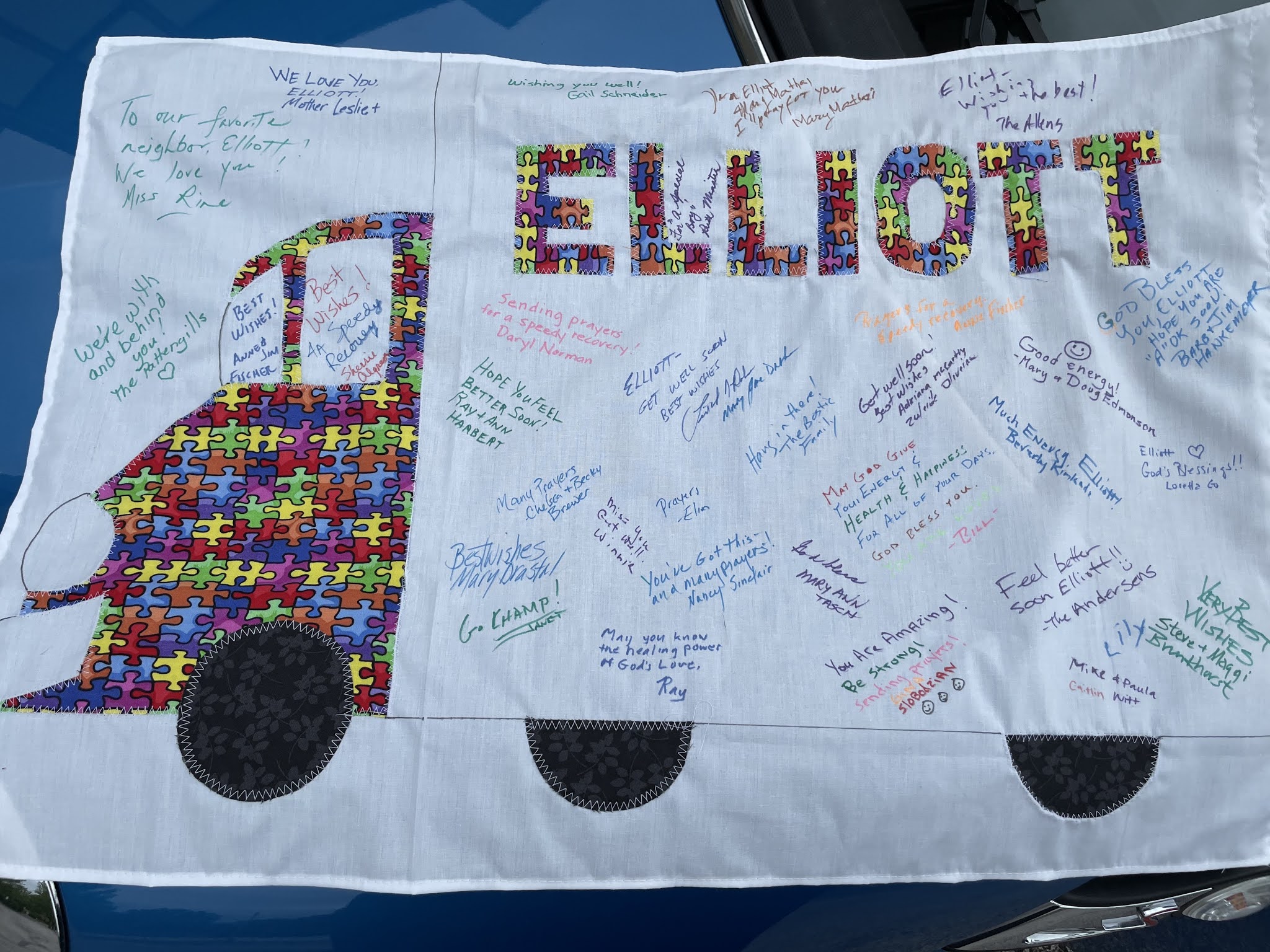
Prayer 3031: For Elliott


Most Blessed Savior,
we worship You and give you praise,
as we turn to you again to rest in your truth,
our model, our brother, our teacher, our guide.

You call us to you in generous welcome, O Christ,
offering the sweets of your wisdom
to all who seek truth, justice, and healing.
We ask for your healing hands to rest upon us today,
curing us of all malice, fear, and faithlessness,
implanting within us the seeds of justice, hope, and unity
that we may flourish and witness joyfully
to the powerful love of God in the world.
Good Teacher, may we be receptive disciples
and walk in your paths of compassion.

Spirit of Wisdom,
guide the hands and the minds of all healers today:
bless doctors, surgeons, and nurses
as they care for the vulnerable
and promote the healing and welfare
of even the littlest ones.
Strengthen those who watch and wait,
and grant your angels charge
over all who seek your respite and comfort
that they may know your abiding presence and protection.
We especially pray for these
who seek your help and your comfort, O God of Hope.

Amen.

Thursday, March 25, 2021

Prayer 2981


O God,
you call us to wakefulness
from our dreams,
and from our resistance to your gospel of love:
help us to see
that the ground we stand upon is heaven itself,
holy and sacred to You,
that you call us to stand tall
on the solid rock of love turned outward.
Help us to see hell
as the place where hope is abandoned,
and to reach out our hands and hearts
to those whose hope is foundering.

We are one people,
made in your image:
You who delights in earthworms and whales,
who whispers the melody of rejoicing
into the hearts of sparrows and robins.
May we recover that wonder and joy
and let that light shine forth from within us,
all thanks to You, O Creator.

One in heart, one in fellowship,
may we share one another's burdens,
and lighten each other's load,
all to the glory of your Name, O Holy One.
Blessed One, draw within the shelter of your compassion
all those who call out in need or anxiety,
and draw within your embrace, Lord Christ,
those for whom we pray.

Amen.

Friday, January 22, 2021

Prayer 2920


Blessed Redeemer,
we turn to You and seek your light
guide us and guard us,
O God our Rock and Stronghold.

Open our minds
to look within your commandments
to the mercy and justice
which are the foundations of your reign,
O Holy One.

Lead us deeper into wisdom
that we may dive deep
into the warmth of community and lovingkindness.
May we trust in your abundant grace, O God,
and reflect that grace and mercy in our lives.

Beloved Jesus,
gentle us and lead us,
that we may be a blessing today.
Light of Light,
comfort these, beloved and precious, 
who turn to You in all their needs.

Amen.

Thursday, January 21, 2021

A Prayer for an Inauguration: Speaking to the Soul for January 21, 2021


God of All Nations,
as a new day dawns,
we ask your blessing
on all the peoples
as we seek to live in unity,
amity,
equality,
and good-will with each other.

Holy One,
may we ever deepen the bonds of honor,
our ties of kinship,
our thirst for wisdom,
our devotion to integrity and truth.

Make us, O Great Creator,
a people who stand for freedom
tempered by responsibility;
who stand for independence
tempered by love for neighbor;
and who protect the least among us
that we be resolved to uphold
the cause of love
in service to community.

Help us form a more perfect union,
establish justice,
ensure domestic tranquility,
provide for the common defense,
promote the general welfare,
and secure the blessings of liberty
for all, now and in the future,
by carrying the light of truth and loving-kindness
that You, O God,
have planted within each of us.

Endow us, Holy One, with a double measure
of humility, kindness, and honesty
that we may examine ourselves
and hold ourselves to the highest standards of justice for all.

May we ever give you thanks,
O Shepherd of Our Souls,
and seek your guidance
as we seek the good road of faith, reason, and peace.
Send out your blessing, O God,
on all who call upon your name,
and grant your comfort and relief
to all for whom we pray.


Amen.

This was first posted at Episcopal Cafe's Speaking to the Soul, January 21, 2021.

Prayer 2919: For a New Day


Merciful One,
We praise You and bless You.
We offer You a song of hope,
and watch it flutter to your hand on gossamer wings.
Receive our prayers and praises, O Lord,
for You are our Savior and Guide.

God of the Rising Wave,
may we have faith
to lay back within your embrace,
trusting that You will bear us up.

May the roots of our faith
drive deep into the soil of our hearts,
when we remember all the wonders You have done,
O Eternal Flame, O Sustaining Companion.

May we wrap our arms round each other
in kinship and love,
and walk gently and reverently upon this precious earth
which you have spread before us,
marvelous and thrumming with life and energy.

Awaken in us true grace and kindness,
Blessed Savior,
and make our hearts beat together as one.
Pour out your peace upon all peoples,
and your comfort upon all for whom we pray

Tuesday, January 19, 2021

Prayer 2917- Prayer for the Day Before the Inauguration


Most Merciful God,
You have been with us
thought the watches of the long night,
and given your angels charge over those who dream.

Grant us wisdom and courage
for the facing of this new day,
for overcoming all the chances and changes
that it may hold,
and to tighten our grip on hope
against the forces that seek to weaken our unity and faith.
Turn the hearts of the violent, O Prince of Peace,
or turn their ankles
so that we may know them by their limping.

May our song be a song of justice and faith
as we break the chains of heartlessness and greed.
Lead us into the higher ground, Blessed Jesus,
that lifts up community, honor, and humility
in seeking to serve each other in your name,
and deny those who seek to divide or seize power through fear.

For we are your children,
made to walk in the way of compassion, integrity, and reason,
called to reconciliation and healing.
May we love you more deeply.
May we make your instruction our guide.
May we be a blessing and a balm to a world in turmoil.

Holy One, anoint us with the oil of gladness,
and pour out a double portion of peace
upon all who call upon You as we pray.

Amen.

Friday, January 15, 2021

Prayer, Day 2912


Eternal Breath of Life,
inhabit our hearts and minds;
transform us by your grace
that we may witness to your beauty.

In wonder and awe,
we consider the works of your hands, O Creator,
and see with new eyes
the glory of your radiance in every living thing
formed by your wisdom.

Call us into renewed understanding
of your gospel message of love and compassion, O God,
and set us aglow by your Spirit of Healing.

Extend the canopy of your mercy
over all whose hope is in You, Beloved Lord,
as we pray in your Holy Name.


Amen.

Sunday, December 13, 2020

Who-- and Whose--Are You? Sermon for the Third Sunday in Advent B

For Joy ©Jan Richardson janrichardson.com


The last six weeks and the last six months have found us in the wilderness of loss. We have interred two of our members, had a delayed funeral for another, and tomorrow there will be another funeral. How much then do we need this Sunday dedicated to hope and joy? But even as we remember our lost loved ones, I am comforted by the fact that the liturgy for funeral rites reminds us of who we are, and whose we are from its opening anthems. “For none of us has life in themselves… If we have life, we have life in the Lord, and if we die, we die in the Lord. So then, whether we live of we die,we are the Lord’s possession.” Even in the midst of wilderness. Even in the midst of trial.

Our psalm is a song of joy and reclamation from the midst of trial. Think how amazing that is. Our psalm is a song of joy, perfect for this Sunday with its theme of Joy—even while the people themselves are in the midst of a crisis. The people can tap into this joy and embody this joy because they know who they are—and WHOSE they are, come what may.

The theme of this psalm is restoration, a jubilee concept. The people are located between two restorations: one in the past, and one that is hoped for in the future. Both of these restorations are celebrated for their impact on the community as a whole. Because they know who they are, they carry the assurance of their past as a predictor of their future. When the past restoration occurred, the people were filled with hope—"like those who dream.” They dared envision for themselves a future.

They saw their good fortune as coming from God, and gave God the credit, and also realized it made them an exemplar among the other nations. Their restoration was an opportunity to witness to the world about the wonders of God—simply by their mere act of showing their gratitude. They knew they were called to be a priestly people, and priests minister to not just their own, but in the name of God to the world. And that hope and that faith helped sustain them during their current time in the wilderness of occupation and oppression. Hope points the way through the wildernesses we all traverse.

This is an important realization. Crises can bring out the best—or the worst in people. Crises can either draw communities together—or destroy them. We also see that often, the best way to conquer a people is from within.

Again and again, when the people of Israel were conquered, they were literally separated from each other. Sometimes, the leaders were carried off into captivity—where some of them acclimated into the captors’ world, and never returned—leaving behind the people of the land to labor for the benefit of the invading empire. The invaders brought along other people and settled them within the boundaries of Israel, hoping to further dilute the people’s unity and encourage the extinction of the culture, in much the way the governments of Canada, the United States, and Mexico dealt with the indigenous people who lived here before European discovery of the Americas or as the Chinese did in Tibet when they invaded it in 1950. Other times, the leaders capitulated, and openly collaborated with the invader, or the invaders raised up those collaborators as leaders and placed them over the people as was happening in Jesus’s time with the Romans, or as the Germans did in France in 1940.

Crises can bring out the best—or the worst-- in people, especially when they lose sight of their reliance upon God and especially upon community. We see that right now in our own time. In the 1930s and 1940s, this country was faced with two staggering crises, one after the other—or more accurately, one that built on the opportunities of the other. The worldwide Great Depression brought this country to its knees. Providentially, this country was fortunate enough to choose leaders who helped rebuild this country by emphasizing the value of community -- the resources that together a people can muster that they would never be able to take advantage of individually.

Other countries weren't as fortunate, or as wise. They instead, while in the throes of the very same economic forces of destruction, turned to supposed “strong men” who offered easy answers and obvious scapegoats for the people's troubles. The funny thing was that these strong men before this crisis had themselves been failures by all the measures of society at the time. And so they needed to overcome that history of failure in their own lives by huge outward displays of power and ruthless oppression. And these so-called “strong men” wasted little time rallying their followers to oppress those around them who were weaker.

Our country was fortunate in that it had a history of democracy that stretched back over a century and a half, and that we had oceans on either side to shield us from the depredations of tyranny in both Asia and Europe. So when we were finally drawn into the conflict with these deadly dominions, on December 7, an anniversary we observed a few days ago, we were able to use our belief in the power of community and common action to form great alliances across broad swathes of our own population and with our allies abroad. The power and strength of common cause and common action in the defense a freedom, justice, and life, through long and bitter struggle eventually overcame the forces of death, division, and hatred.

We made use of our time of non-involvement to prepare for the day when we would be called upon to help. When we finally did enter the Second World war officially, we continued to rally together, moving ever closer to the ideal of being one American people despite our differences. Millions went overseas and fought. Tens of millions more sacrificed all that they had previously known here at home, upending their lives, giving up food, scavenging for scrap, giving up their former jobs and learning new ones for the good of their community and for the sake of the survival of democracy.

The power of determination not to be defeated—because it was unthinkable—and the understanding that only unified, coordinated action would defeat the enemy at our gates was vital to the defeat of evil. And this can never be a lesson that we in our time forget as we face our own challenges in this time of pandemic. Only by coming together and by honoring each others’ labor and contributions to building stronger communities—communities which themselves are part of a sacred whole—can a people survive times of crisis. Our history—and today’s psalm-- remind us of this. Our national spirit was fueled by a realization of the previous times that we ourselves had persevered and won through unity from our colonial past through the Civil War and beyond. After the war, groups who had previously not been fully allowed at the national table of equality used the idea of common action to themselves fight for their full inclusion within our common life.

Our psalm demonstrates the power of memory, and the power of identity. Knowing who you are, where you come from, and working together for the common good helped the people of Israel survive against repeated attempts to crush them. They know their history enough to know that they have survived, through the grace of God, in the past.

Looking back to those times of salvation, even in the midst of the current crisis, under their current occupation, the people have confidence that restoration can occur again. Even though they labor for the profit of their foreign overlords as a conquered people, they nonetheless continue in planting crops, even if it is with tears that they sow.

The proof that they have faith is this declaration: “The Lord has done great things.”

The importance of remembering and commemorating events in the past is that this gives those past events new life in the present: to “re- member.” The hoped-for restoration is anticipated like a torrent of rain after a long drought, that fills up the baked walls of arroyos and gullies and the baked channels of canyons with water enough to allow flourishing for months afterward. That’s what is meant by the comparison to the watercourses of the Negev.

Because it is not enough for the people of Israel to survive, if they abandon their true role as God’s priestly people. If they abandon their sacred duty to bear witness to the hand of God within their lives, to serve as a light to all the nations of the wonders of their God. This is also a challenge we as Christians—also called to be a priestly people—must meet. It is a challenge that we are being formed to meet. Do we ourselves know who we are—and more importantly, WHOSE we are?

Flash forward to our gospel. Those who are collaborators with the invaders see this wild-looking man come up out of nowhere, and they demand to know who he is. And notice the difference between John and Jesus. When Jesus gets asked who he is, he often turns the question back at his questioners.

John is more straightforward: right out of the box he tells his questioners who he is NOT: Not the Messiah. Not Elijah. Not “the” prophet. Just the one who we heard about in last week’s reading from Isaiah, the one whose voice comes out of the wilderness by the command of God, even when that voice itself doesn’t fully comprehend what direction God’s path through the wilderness is going.

John is in the wilderness because the wilderness is often where God is most near and obvious to us. Who is John? He is the witness to the light—not the light itself. He himself is not the source of salvation. He is sent by God to prepare the way for the One who is.

Once God helps strengthen the people and provides them with a savior, they don’t get to passively sit back and wait for salvation to be handed to them on a platter. They then have harvesting to do, with this harvesting will come with joy enough to turn their tears to shouts of joy. The harvest will be plentiful, and God’s people must continue in the meanwhile to be faithful, to have hope, and to do what they can to maintain the ties of community.

As we heard last week, the Way of God is the Way of fearlessly testifying to the power of God in our lives. God promises a way through the wilderness, not an exemption from the wilderness. God calls us back from the exile we have put ourselves in, through fear and faithlessness. If we choose the way of God, the path that is shaped not by our own fears and blindness but by the powerful, redeeming Law of Love, we will take a step toward working alongside God in building a new creation, a new hope that will now burst forth, in which all will be level and even and equitable. This is a song of relief, of joy at deliverance, and a renewed covenant between God and the people.

God reminds God’s restored people that salvation is now—not decided after our deaths, but offered to us as a gift and a blessing right NOW.

Eternal life is now. What we do today in this time is the most powerful testimony we can give to the power of God in our lives. It is in times of crisis and darkness that our witness shines as brightly as John’s did. Many around us are losing hope. It is our calling to remember that we are a people of hope, of resurrection, and to lift that message high before us for the sake of all.

Today’s reading from Isaiah roots salvation in the time in which we live. Salvation is the kingdom come on earth as it is in heaven, and requires not just our grasping it for ourselves but our making it visible to. those around us by how we live. Salvation looks like good news, healing, liberty, release, and comfort. It is what the reality of this world looks like by God’s command-- a restored city, better and brighter than it had ever been, restored to the glory it was intended but never achieved. It orients our attention precisely AWAY from our own selfish concerns as individuals AND as members of the Church, from our own self-preservation to a grander purpose: to working for the freedom, liberation, and healing of those who are marginalized in our society. Working for the removal of all barriers that stand between those around us and the life of blessing.

On this third Sunday in Advent, we are drawn to ask ourselves who we are—and whose we are. Can we give ourselves over to our part in pointing the way? Are we willing to strengthen this community of faith so that it may care not just for our own needs but the needs of others? Are we witnesses to the active, powerful love of God in the world, especially to those who have lost sight of the light? Are we beacons of hope who exist for the sake of those who have lost their way? Are we living embodiments to the economy of God, willing to give of ourselves to embody the values of equality and compassion?

Advent reminds us of the urgency of “Now” and what we do with it while we wait for the coming of the light. Together, may we declare that the Lord has done great things—and is doing them still, right here among us. Our witness moves that dream to a reality, for we know whose we are.

Amen.

Preached the 10:30 am live-streamed service at St. Martin's Episcopal Church, Ellisville, MO, in time of COVID19.

Readings:


Tuesday, November 3, 2020

Prayer Service as the Polls Close


Prayer Service at the Close of the Polls

November 3, 2020

St. Martin’s Episcopal Church, Ellisville, MO


Opening Words

Celebrant:     Stay with us, Christ, for it is evening.

People:         Make your Church bright with your radiance.

Celebrant:     Let us pray.


Collect for an Election    (Read in unison)       BCP, p. 822

Almighty God, to whom we must account for all our powers and privileges: Guide the people of the United States (or of this community) in the election of officials and representatives; that, by faithful administration and wise laws, the rights of all may be protected and our nation be enabled to fulfill your purposes; through Jesus Christ our Lord. Amen.


The Readings


A Reading from the Book of Isaiah.                                  Isaiah 58:6-12


Is not this the fast that I choose:
   to loose the bonds of injustice,
   to undo the thongs of the yoke,
to let the oppressed go free,
   and to break every yoke? 
Is it not to share your bread with the hungry,
   and bring the homeless poor into your house;
when you see the naked, to cover them,
   and not to hide yourself from your own kin? 
Then your light shall break forth like the dawn,
   and your healing shall spring up quickly;
your vindicator shall go before you,
   the glory of the Lord shall be your rearguard. 
Then you shall call, and the Lord will answer;
   you shall cry for help, and he will say, Here I am. 


If you remove the yoke from among you,
   the pointing of the finger, the speaking of evil, 
if you offer your food to the hungry
   and satisfy the needs of the afflicted,
then your light shall rise in the darkness
   and your gloom be like the noonday. 
The Lord will guide you continually,
   and satisfy your needs in parched places,
   and make your bones strong;
and you shall be like a watered garden,
   like a spring of water,
   whose waters never fail. 
Your ancient ruins shall be rebuilt;
   you shall raise up the foundations of many generations;
you shall be called the repairer of the breach,
   the restorer of streets to live in. 


Reader:             The Word of the Lord.

People:             Thanks be to God.


Canticle N   (In Unison)                                              1 John 4:7-11

A Song of God’s Love


Beloved, let us love one another, 

for love is of God. 

Whoever does not love does not know God, 

for God is Love. 

In this the love of God was revealed among us, 

that God sent God’s only Son into the world, 

so that we might live through Jesus Christ. 

In this is love, not that we loved God but that God loved us 

and sent God’s son that sins might be forgiven. 

Beloved, since God loved us so much, 

we are also to love one another. 

For if we love one another, God abides in us, 

and God's love will be perfected in us. 


A Reading from the Gospel of Matthew                             Matthew 20:25-28


But Jesus called them over and said, “You know that those who rule the Gentiles show off their authority over them and their high-ranking officials order them around.  But that’s not the way it will be with you. Whoever wants to be great among you will be your servant. Whoever wants to be first among you will be your slave— just as the Human One didn’t come to be served but rather to serve and to give his life to liberate many people.”


Reader:        The Word of the Lord.

People:        Thanks be to God.


Prayers for an Election

Written by The Rev. Shannon Kelly, Director Department of Faith Formation, The Episcopal Church


Celebrant:

Loving God, creator of this world who is our source of our wisdom and understanding, watch over this nation during this time of election. Help us to see how our faith informs our principles and actions.


Intercessor:    God, our creator,
People:         Guide us in truth and love.


We give thanks for the right to vote. Help us to hold this privilege and responsibility with the care and awareness it merits, realizing that our vote matters and that it is an act of faith.


Intercessor:    God, our creator,
People:         Guide us in truth and love.


Guide us through this election as a nation, state, and community as we vote for people to do work on our behalf and on the behalf of our communities. Help us to vote for people and ballot initiatives that will better our community and our world so it may reflect the values Christ taught us.


Intercessor:    God, our creator,
People:         Guide us in truth and love.


Help us create communities that will build your kingdom here on earth – communities that will protect the poor, stand up for the vulnerable, advocate for those who are not seen and heard, and listen to everyone’s voice.


Intercessor:    God, our creator,
People:         Guide us in truth and love.


We pray for this nation that is deeply divided. May we come together for the common good and do as you have called us to do – to act justly, love mercy, and walk humbly with you through creation.


Intercessor:    God, our creator,
People:         Guide us in truth and love.


Help us act out of love, mercy and justice rather than out of arrogance or fear.


Intercessor:    God, our creator,
People:         Guide us in truth and love.


Lord, continue to guide us as we work for the welfare of this world. We pray for places that are torn by violence, that they may know peace.


Intercessor:    God, our creator,
People:         Guide us in truth and love.


We pray for communities who are struggling with inequality, unrest, and fear. May we all work toward reconciliation with one another and with God.


Intercessor:    God, our creator,
People:         Guide us in truth and love.


Help us to listen in love, work together in peace, and collaborate with one another as we seek the betterment of our community and world. 


Intercessor:    God, our creator,
People:         Guide us in truth and love.


Collect for Social Justice                                    BCP p. 823

Grant, O God, that your holy and life-giving Spirit may so move every human heart and especially the hearts of the people of this land, that barriers which divide us may crumble, suspicions disappear, and hatreds cease; that our divisions being healed, we may live in justice and peace; through Jesus Christ our Lord. Amen.


Collect for Our Country                                    BCP p. 820

Almighty God, who hast given us this good land for our heritage: We humbly beseech thee that we may always prove ourselves a people mindful of thy favor and glad to do thy will. Bless our land with honorable industry, sound learning, and pure manners. Save us from violence, discord, and confusion; from pride and arrogance, and from every evil way. Defend our liberties, and fashion into one united people the multitudes brought hither out of many kindreds and tongues. Endue with the spirit of wisdom those to whom in thy Name we entrust the authority of government, that there may be justice and peace at home, and that, through obedience to thy law, we may show forth thy praise among the nations of the earth. In the time of prosperity, fill our hearts with thankfulness, and in the day of trouble, suffer not our trust in thee to fail; all which we ask through Jesus Christ our Lord. Amen.


The Blessing                                                      from Saint Clare

Live without fear: 

your creator has made you holy,

has always protected you,

and loves you as a mother.

Go in peace to follow the good road,

and may God's blessing be with you always.

Amen.


Dismissal

Celebrant:        Go in peace, to love and serve the Lord.

People:             Thanks be to God.