Showing posts with label Ash Wednesday. Show all posts

Wednesday, March 5, 2025

A Poem, A Proverb, A Painting, A Prayer: A Lenten Devotional-- Day 1: Ash Wednesday

A Poem, A Proverb, A Painting, A Prayer: 
A Lenten Journey
Day 1: Ash Wednesday
Today's Theme: Being Beloved Dust


Poem: Ash Wednesday, Unshowered
My hair’s pulled back to disguise the grime,
though maybe it’s well that I’m unclean,
since from dust you came, to dust you will return,
the priest recites, smearing my forehead.
Once, twice, and I’m marked, a lintel in plague years.
I’m invited to kneel and read the fifty-first Psalm,
recalling how David watched Bathsheba bathe.
Cleanse me with hyssop, and I will be clean;
wash me, and I will be whiter than snow.
Merciful one, save me from slight repentance.
I pierced the center of the white orchid, Lord,
and it was mud, blood’s cry, my body’s blighted tender.
---------- Anya Krugovoy Silver (1968-2018), from Image Journal


Proverb:
“It is when we notice the dirt that God is most present in us; it is the very sign of his presence.”
----—C. S. Lewis, Christian apologist and convert


Painting: Ash Wednesday, by Julian Falat, 1881
 
An 18th century French priest anointing worshippers with ashes


Prayer:
God of salvation’s joy,
we gather to celebrate and revere you.
We come, realising that we are broken.
Forgive and re-create us.

God of unfailing love,
we gather to worship and honour you.
We come, and because of your compassion,
forgive and renew us.

God of new beginnings,
we gather to praise and thank you.
We come, and through your grace and mercy,
forgive and restore us,
so that with clean hearts we may truly worship you.
Amen.
-----------Joan Stott, Australian, based on Psalm 51:1-17, from her blog “The Timeless Psalms.”

Thursday, February 23, 2023

Marked By Love: Speaking to the Soul February 23, 2023


Ashes to tie us to dust,
the alleged poverty of too brief time on Earth,
but instead proclaims our kinship
with the flaring symphony of stars overhead,

The fragrant oil graves the ash upon each forehead,
and answers the ash’s challenge
with a proclamation of being chosen and beloved,
entrusted as heirs of God’s promised lovingkindness.

Then the cross,
the shape of love that never gives up,
drawn into the tender and wide open embrace
of the One, who proclaims with generous grace
that Love
always
wins.

Emptiness isn’t poverty,
but the ability to make room for something better,
hallowing and honoring us
by reminding us of our unity
with all of creation borne tenderly by God.


This was first published at Episcopal Journal and Cafe's Speaking to the Soul on February 23, 2023.

Wednesday, March 2, 2022

Attention, Astonishment, Witness: Homily for Ash Wednesday


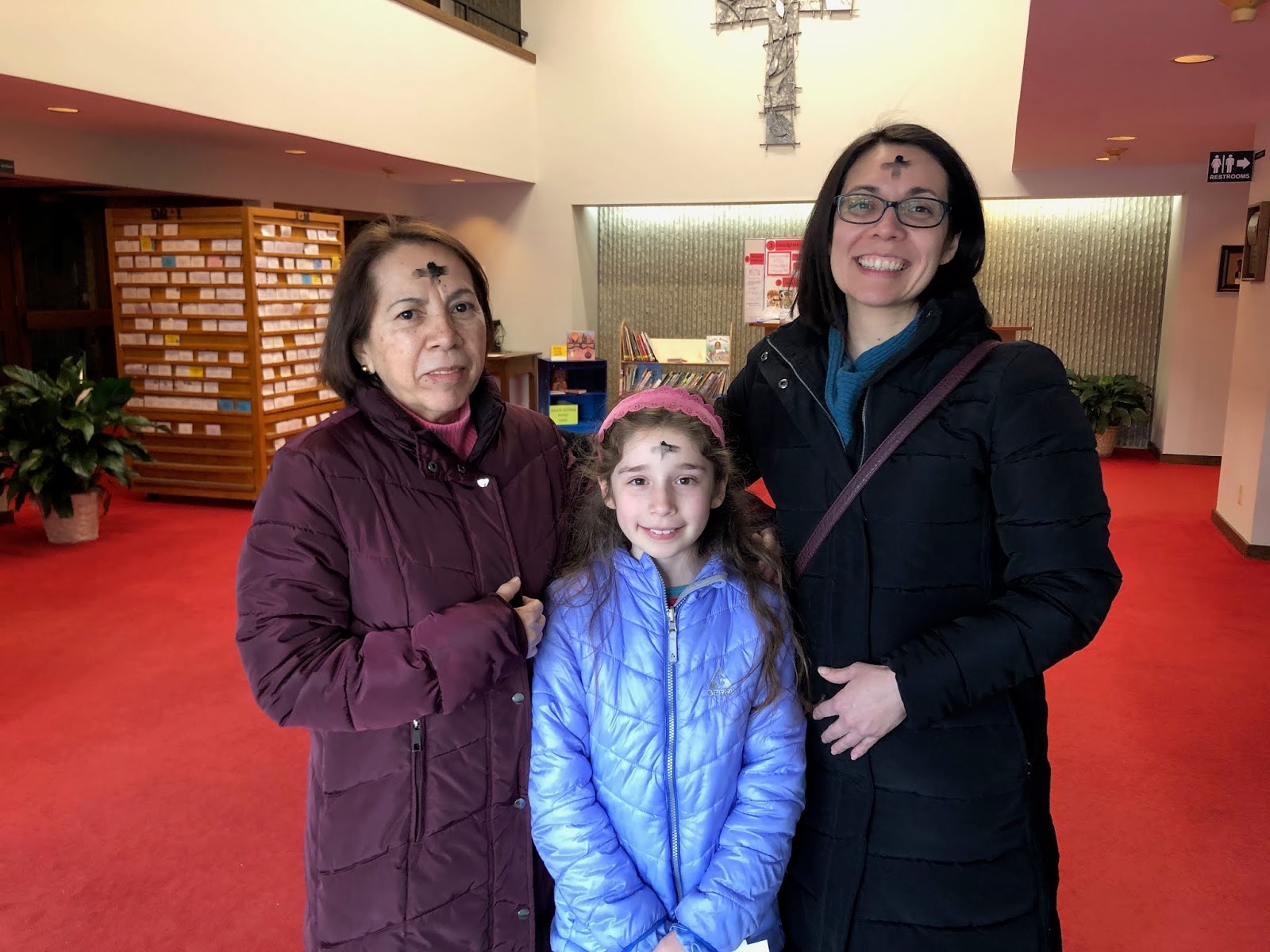
Some might find it ironic about the gospel reading for today—to hear Jesus warn against disfiguring our faces when many of us are getting ready for the imposition of ashes. On the surface, it would seem that we are engaging in exactly the kind of grandstanding that Jesus is warning about. But when we have the ashes placed upon our foreheads, the purpose is to remind US that we are entering a penitential season, and that since we are ashes, it is important to live our lives in the most faithful way possible.

But also, Jesus spoke at a time when big shows of piety were often put to work for gain in social status or influence, because religious performance was something most people took for granted. And while many people nowadays may do the first part of that last sentence—putting on a show of their supposed religious affiliation, those numbers are getting smaller and smaller each year all across the West. For many of us, walking around all day with a sign of a cross on our foreheads makes us stand out in a different way in an ever-secularizing world.

It's not about showing off. It IS about what you most treasure and proclaim in your life.
The late, beloved American poet Mary Oliver, in her poem “Sometimes,” offered seven linked poems together. Right at the fulcrum, at number 4, she offered these instructions for living a life:

Pay attention.
Be astonished.
Tell about it.

I am convinced that those are also the instructions for discipleship:

Pay attention.
Be astonished.
Tell about it.

Attention. Astonishment. Witness.

So let’s start with paying attention right now. 

Just where did those ashes come from that we will soon have pressed into our brows? They came from the palms that we waved on Palm Sunday, ten months ago. They were once young fronds on a palm tree, and then we blessed them and waved them as we re-enacted Jesus’s triumphal entry into Jerusalem a week before his trial and crucifixion. Then they sat and dried out for almost a full year. Eventually the dried out remnants were collected, and then they were burned. A match was lit, and light and heat were released from the gases that remained in the palms from the materials they had absorbed from the ground during their life on the tree. They were then ground up, and mixed with the same chrism that we use when we anoint people at their baptisms and at their confirmations. Oil and ashes. Light and heat. And a human touch to press them onto our foreheads—one soul to another.

So what is the astonishing thing about this? We are reminded that we came from the dust and we return to the dust. That sounds dreadful—until you consider that the ash and dust that we are marked with contains atoms which resonate in you, me, everyone and everything, everywhere. The elements that make up that dust were in that palm frond and in that tree and in its roots, but have also been here all along in the billions of years since the Earth’s creation. And those elements were deposited here and fused together to create this beautiful planet, born from the explosions of stars halfway across the galaxy. As Joni Mitchell sang, “We are stardust….” That is indeed astonishing, and it reminds us that here at the start of Lent we are called to recognize the acknowledge the way that this common heritage makes us all one. Especially as the drums of war beat right now across eastern Europe in Ukraine, what could be more astonishing than that bold statement of fact? We are all dust, and we are therefore all one with each other and with all that is.

And then, that mark on our foreheads is part of us telling about it. We are not called to come to church merely to feed ourselves or tend to our own needs. We are called to TELL the world about what we have encountered in Jesus. We are called to let that black smudge on our foreheads be not just an acknowledgement of our finitude, our own mortality, but our own encounter with the love of God as it became human and mortal, just like us, to show us how to live a fully human life—one of love and concern for others, and faithfulness to our God.

And so how does Mary Oliver demonstrate that sense of attention, astonishment, and witness? Now that we have looked at the balancing point, let’s hear the poem in its entirety:

1.

Something came up
out of the dark.
It wasn’t anything I had ever seen before.
It wasn’t an animal
or a flower,
unless it was both.

Something came up out of the water,
a head the size of a cat
but muddy and without ears.

I don’t know what God is.
I don’t know what death is.

But I believe they have between them
some fervent and necessary arrangement.

2.

Sometimes
melancholy leaves me breathless…

3.

Water from the heavens! Electricity from the source!
Both of them mad to create something!

The lighting brighter than any flower.
The thunder without a drowsy bone in its body.

4.

Instructions for living a life:
Pay attention.
Be astonished.
Tell about it.

5.

Two or three times in my life I discovered love.
Each time it seemed to solve everything.
Each time it solved a great many things
but not everything.
Yet left me as grateful as if it had indeed, and
thoroughly, solved everything.

6.

God, rest in my heart
and fortify me,
take away my hunger for answers,
let the hours play upon my body
like the hands of my beloved.

Let the cathead appear again-
the smallest of your mysteries,
some wild cousin of my own blood probably-
some cousin of my own wild blood probably,
in the black dinner-bowl of the pond.

7.

Death waits for me, I know it, around
one corner or another.
This doesn’t amuse me.
Neither does it frighten me.

After the rain, I went back into the field of sunflowers.
It was cool, and I was anything but drowsy.
I walked slowly, and listened

to the crazy roots, in the drenched earth, laughing and growing.


This is our chance to repent. I know that word makes many of us wince and edge away. So let’s try to rephrase it. This is our chance to re-center ourselves, not just for forty days but for each moment. 

Lent calls us to attention, astonishment, and witness. Lent calls us to see the potential rather than the dreariness and horror of pandemic and now war, to look for the beauty and unity among ourselves and all God’s sparkling mysterious creation placed here for our support and care. Lent calls us to proclaim, to tell, to be truthful and reliable in our witness to God’s love by embodying God’s love. I don’t know about you, but I have never needed that kind of Lent more than right now. A Life-giving Lent. A Lent of slowing down and inviting ourselves to wonder and gratitude. A Lent that calls us to stand for right and honor and compassion no matter what the price tag. Lent calls us not to more suffering and uncertainty, but to holiness, which is ALWAYS within our range of choices.

Lent is not a season to be endured, but a gift of insight into what we really should treasure. It is in the everyday world that we live, and we need to make our faith not just a Sunday faith or a Lenten discipline but a part of a living and breathing. Some call this mindfulness, and it is such a wonderful concept. 

Pay attention.
Be astonished.
Tell about it.


Preached at the 7 pm AshWednesday service, online and in person, at St. Martin's Episcopal Church, Ellisville, MO.

Readings:

Wednesday, February 17, 2021

The Least We Can Do: Homily for Ash Wednesday 2021


Lent is a season that I doubt many people say that they look forward to. First of all, there is a broad swath of American Christianity that scarcely pays this season any notice. Then there is the common misconception of most things about Lent in popular culture. 


Even people who are NOT religious seem to know plenty about Mardi Gras, with its party-in-the-streets, purple green and gold, king cake eating, Southern-Comfort-drinking, bead-tossing, zydeco-dancing, costume-wearing, “laissez le bon temps rouler” attitude. One last chance to party it up before what is commonly held to be seven long weeks of denial and surrender during what in most of the US is the coldest part of winter.


After the big party comes Ash Wednesday, the official start of Lent, and to outsiders it can seem to be filled with morbid reminders of human mortality. It’s a day of fasting after the feasting of Mardi Gras—and THIS meaning of the word “fast” is one most of us view with at worst dread and at best resignation.


Christians who observe Lent are often asked “What are you going to give up for Lent?” Give up. As in surrender. As in submission. And these are very uncomfortable words. 


Then there’s the actual idea that you must offer up some beloved habit or treat for those seven weeks, denying yourself the pleasure of chocolate, or dessert, or soda, or caffeine, or swear words, or refined sugar, or red meat. You know—all the things that help us do the adulating during the day. And the giving up of something that our body may crave with the idea that it will make us more spiritual perpetuates some unhelpful stereotypes about suffering and pleasure, not to mention exaggerating the supposed divide between body and soul. Done right, Lent reminds us that our bodily existence is a gift from God, not something to deny. 


Too often, all of the things we associate with Lent can threaten to overwhelm us with distraction rather than leading us into a deeper understanding of how much God loves us and pursues us throughout our lives. Worst of all, it gives us the idea that God wants us to be deprived, or even miserable. As if devotion to God can’t lead us to true joy and praise! 


I fear we have allowed Lent, and much of our church-going experiences, to become transactional rather than transformational. We say we believe in Jesus, but we avoid following him. We get hung up on saying the right words to get into heaven, and forget to do the right things so that we can stake our claim in God’s love and abundant mercy right now. Instead of wonder, we scoff. 


We spend too much time eating the bread of anxiety. We hold ourselves back, thinking it will keep us safe, or we worry what our friends would think if we started placing God’s commandment to love each other at the center of our existence, rather than our own fears and suspicions at the heart of our day. 


Too often, we end up doing the least we can get away with, in the hopes that we can forget that we are God’s, and we are also God’s beloveds. We turn our backs on people and associations if they do not cater enough to us. WE put up our defenses rather than really allow love in, for fear of being hurt—and yet the binding of our hearts does far more damage than any potential heartbreak could cause.


Jesus urges us to a better way. In our gospel we are urged to enter into fasting and self-examination with joy and gladness, knowing that offering just this little thing to God still leaves us enormously outmatched by the gifts that God offers to us. 


The name of the season on Lent comes from the Middle English word for "Spring." We have it all wrong: Lent is a time of new growth, of anticipation, of hope, and of looking forward in joy and gratitude for the breaking of winter’s grip on our frozen hearts. Jesus calls us to joyfully embrace the turning into the greening of our spirits into a renewed commitment to God and each other.


The love that Christ offers to us, especially during Lent, is one of self-giving, of generosity. That love elicits in us the impulse turn upon its head the notion of doing “the least we can do” in our relationships with God and with each other—of avoiding the common responsibility and care we owe each other as fellow-creatures. When we seek to offer a sacrifice to God, may we remember that the purpose of a sacrifice is not pain and denial, but to make ourselves holy, and making ourselves holy is a step toward making ourselves whole. 


As we are marked with the ashes today, ashes derived from the palm fronds from previous Palm Sundays, may we remember that the ashes originated in rejoicing, in proclaiming Jesus as our ruler and Lord within our lives. And let us wear those ashes with joy, with hope, as people of love.


As we are reminded that we are dust, and to dust we shall return, may we remember that ashes are not just a sign of mourning but a reminder of our union with all creation, and that being dust makes us kindred of the stars that dance overhead, and set ourselves the task, during these 40 blessed days, to be drawn back into the knowledge of our one-ness with all things, our fellowship with even the most common stuff of creation, and be drawn therefore into love and care with each other and with all the whole earth, that we may we dies to the casual sins of complacency and disdain that so pervades too much of our world, and instead live in gratitude and joy --starting today and for the rest of our lives.

Let Lent begin the thawing of our gratitude—formed by the hand of God, who breathed life into us from God’s own Spirit, the God who then gave us God’s Son as the ultimate sign of how beloved we all are—all of us. No exceptions. I am convinced that living out our days embodying that truth would be the greatest, most holy fast and offering of all. Nothing more, and nothing less, than all we are we are called to offer to each other, and to God.


And that is the least we can do.


Amen.

Preached at the online noon service on Ash Wednesday, February 17, 2021, at St. Martin's Episcopal Church, Ellisville, MO

Readings:

Wednesday, February 26, 2020

Taking on the Cross: Homily for Ash Wednesday


It is on this day that we prepare to enter the season of Lent, and that we are encouraged to take stock of any sins we have committed, any repentance we need to make. It is also a time when many of us who attempt to observe a holy Lent are often prone to “give something up” for Lent: swearing, or drinking soda pop, or chocolate, or electronics. Some of us fast from all food or simply meat on Ash Wednesday and on Friday. The taking on of such a special discipline is meant to help us focus our priorities during the 40 days of Lent, from being reminded of our mortality on Ash Wednesday through the somberness of Holy Week, to emerge in the glorious resurrection light of Easter. 

But what if we looked at this from another angle? What if we thought of this as a chance for true repentance—a literal turning from away from one thing in hope of something better? Rather than giving up, what if we set an intention for ourselves to give in, with an emphasis on the word “give?” What if we used this Lent as a chance to give in, to look in, to lean in--- to try to surrender fears, attitudes, and failures of heart that separate us from the love of God we are called to embody, to take into our very heart and soul and mind. When we surrender these things, there is then a space hollowed out in our hearts that can be filled with Christ. 

Many people comment on the irony of wearing ashes publicly after we have heard a gospel reading that warns against making a show of religious observance. But Jesus is not talking about the wearing of ashes in our gospel. Perhaps the key lies in the fact that we ourselves get so caught up in the idea of the exercising of public piety, that we often lose sight of how Jesus defines that piety—not as ashes marked on our foreheads, but on the three vehicles he highlights: giving alms, praying, and fasting, which were the three most common outward practices of an observant Jew in those days.

When we give alms, we are called to give to others without rules or expectations or demands.

When we pray, we are called to listen even more than we speak, and to place ourselves somewhere where we can hear the voice of our Beloved Savior speaking to us. 

When we fast, we are called to clear away distractions to focus on what really matters. 

Rather than make a game out of our own will-power, we’re actually called to give ourselves over to the will of God in our lives turned outwardly rather than inwardly. 

The difference lies in intent. Our reading from Joel urges us to strip away all the masks that separate us from focusing on God when it urges us to “rend our hearts, and not our clothing” as a sign of our repentance over where we have fallen short and sinned in the previous year. In other words, Jesus calls us to lay down the illusion that we can hide from God, or ourselves and to take the risk to be open and humble before God—and even, harder, to trust in God’s promises. Jesus calls us to strip away barriers, but also the false fronts we put on as a shallow defense against self- knowledge and change. 

The word translated as “hypocrites” here often in the original Greek had a meaning closer to “play-actors.” In Greek theatre at that time, of course, actors wore exaggerated masks so that even those in the furthest seats could see the expressions. Of course, this meant that the actors’ true selves were hidden from view. On the one hand, then, to act as a play-actor is to make a mockery through exaggeration, to overact or mug before the audience. It is said that an actor lives for the applause. Jesus’s remarks here also lead us to ask ourselves about the motivation behind our actions. Are we doing religious things so that we can be thought of as good, or doing good things for their own sake? 

If we are honest with ourselves, most of us know an awful lot about wearing masks. And the reality about those masks is that they may fool the people around us, but they certainly don’t fool God. God knows exactly who we are: our hurts, our self-delusion, our false pride and secret fears. And yet God loves us anyway. Loves us—and encourages us to drop the masks and allow ourselves to really be seen. To be seen—and freed to do the work of discipleship that grounds us in love of God and love of each other. 

The marking of our foreheads with ashes comes with a reminder that we are made from the dust, and to the dust we shall return. All of us. But the ashes are also mixed with oil, to remind us that we have each been chosen by God as beloved, anointed to spend these 40 days rededicating ourselves to Christ’s service. 

And to these two precious elements, we add a third: the shape of the cross. The two lines that are drawn upon our foreheads with this dust are in the shape of a cross—reminding us of a love that never gives up on us, ever, that calls us to new life even as we remember our bodily mortality. It is on that cross that we are drawn straight into the open embrace of Jesus, with his arms outstretched upon that cross, showing us that Love Always Wins. 

 So, putting our masks aside, let us humbly take on the loving emblem of the cross—and let our hearts be shaped by the Love that calls us to repentance without ever abandoning us. 

Amen.

Preached at the 12:00 Eucharist at the Fountains of West County, and at the 7:00 pm Eucharist at St. Martin's Episcopal Church, Ellisville.

Readings:
Joel 2:1-2,12-17
Psalm 103 or 103:8-14
2 Corinthians 5:20b-6:10
Matthew 6:1-6,16-21


Prayer, day 2585: for Ash Wednesday


As dawn parts the curtain of night, 
let us fall upon our knees
before our Creator and Redeemer.

Lord God, we confess to You all our sins- 
those done by us, and those done in our name.
We confess to You all our ruptured relationships, 
sundered by fear,
loss of hope,
and idolatry of self. 

May we renounce our casual acceptance 
of the pain of others
in the name of our own comfort.
May we seek forgiveness,
that we rededicate ourselves
to being healing hands in the world.
Let us purify our souls,
and be strengthened to walk
in the pathways of holiness and righteousness.

Refine us, renew us, O Merciful One:
our hearts are outstretched like open hands,
to be charged with your grace and light.
We pray now for all who seek You,
and for all who put their trust in You, Gracious Savior.

Amen.

Wednesday, March 6, 2019

Beloved Dust: Homily for Ash Wednesday


How ironic that we have a gospel that warns us against the practice of a public piety on a day when many Christians mark their foreheads with ashes and wear them all the rest of the day?

Yet I think there are good words in our gospel today to serve as a reminder of what this day is all about.

It’s trendy to talk about “giving things up for Lent”—even people who do not normally make a big show of their faith talk about it. But I think we need to be careful, lest our Lenten fasts—because that is what that is, a fast from something—become the center of our attention, or the discipline of giving up chocolate or soda or whatever becomes a test of one’s own will rather than an offering up to God of our determination to repent from all that has distracted us from our love and worship of God, and from our love and care of each other, throughout the rest of the year.

Let’s be honest—how often have we chosen something to give up for Lent based on how peripheral it really is to our lives, and with a subtle understanding that we can give it up for these next 7 weeks without too much real disruption to our daily business? I know I have been guilty of that myself. 

What if we rethought the idea of fasting completely, and aligned it more properly with the true purpose of Lent: which is to center ourselves more firmly into a God-centered and directed life, a life lived not just for denying ourselves treats but in treating ourselves—and each other, no matter who those others are-- as God wants us to do?

Pope Francis has been attributed with these suggestions on the subject of fasting during Lent:

If you really want to fast this Lent,

Fast from hurtful words     and instead say kind words in their place.
Fast from the sadness caused by discontent   and instead be filled with gratitude. 
Fast from anger    and instead be filled with patience.
Fast from pessimism     and instead be filled with hope.
Fast from worries     and instead have trust in God.
Fast from complaints     and instead contemplate simplicity.
Fast from pressures     and instead be prayerful.
Fast from bitterness     and instead fill your hearts with joy.
Fast from selfishness     and instead be compassionate to others.
Fast from grudges     and instead be reconciled.
Fast from words     and instead be silent so you can listen.

When we seek to offer a sacrifice to God, may we remember that the purpose of a sacrifice is not pain and denial, but to make ourselves holy, and making ourselves holy is a step toward making ourselves whole and at peace within the bounds of God’s mercy. It is a reminder to us of our dependence upon something outside of ourselves that God’s word insists over and over again throughout scripture is the heart of the gift of being fully human in God’s image.

As we are marked with the ashes today, ashes derived from the palm fronds from previous Palm Sundays, may we remember that the ashes originated in rejoicing, in proclaiming Jesus as our ruler and Lord within our lives.

As we are reminded that we are dust, and to dust we shall return, may we remember that ashes are not just a sign of mourning but a reminder of our union with all creation, and that being dust makes us kindred of the stars that dance overhead, and set ourselves the task, during these 40 blessed days, to be drawn back into the knowledge of our one-ness with all things, our fellowship with even the most common stuff of creation, and be drawn therefore into love and care with each other and with all the whole earth, that we may we dies to the casual sins of complacency and disdain that so pervades too much of our world, and instead live in gratitude and joy --starting today and for the rest of our lives.

These ashes do not just remind us of our ending and our death. These ashes are really a sign of renewal, of unity, of hope.

They remind us of our beginning—formed by the hand of God, who breathed life into us from God’s own Spirit, the God who then gave us God’s Son as the ultimate sign of how beloved we all are—all of us. No exceptions. I am convinced that living out our days embodying that truth would be the greatest, most holy fast of all.

Let us dedicate ourselves to the true fast to which God calls us. Please join with me in prayer. 

Humbly, let us kneel before our God,
opening our hearts to examine and purify them
for Love's sake.

Holy One, you are the True Vine,
our Portion and our Cup,
our Model of Mercy and Justice.

We acknowledge before You
and each other
our manifold sins and wavering intentions,
and ask forgiveness. 
Teach us to walk not in fear
but in integrity, mercy, and love,
and gentle our warring spirits, we pray.
Cleanse and deliver us
from all envy, jealousy, and hatred,
from all that seeks to diminish another
for our own benefit.

Lord, reconcile us to right relationships;
teach us to follow you as our true North Star.
Gentle Savior, you knock at the door
and ask to abide within us:
make us worthy to receive you.
You call us to be your Body in the world,
your witness against evil,
and to reflect your light
through the storms and trials of life.

In all we do,
may we seek to abide in You
in fellowship and compassion.
Lord, we remember before You
those who are in pain, sorrow,
or any kind of trouble.
Send your Spirit to guide us into redemption,
and grant respite and comfort to those for whom we pray.

Amen.


Preached at the noon and 7 pm service at St. Martin's Episcopal Church, Ellisville, on March 6, 2019.

Prayer 2229: Ash Wednesday


Most Holy God,
we humbly come before You,
seeking pardon and reconciliation from You
and all whom we have wronged.

Mark us as your own today, O God, we pray,
that we may remember our covenant of devotion
with You and each other.
We open our hearts to You:
refine and purify us,
that we may be filled with compassion and humility.
We open our minds to You:
refine and purify us,
that we may be filled with your wisdom and truth.
We open our souls to You:
refine and purify us,
that your Spirit may live within us always
and guide us to new life and hope.

May we focus all our efforts
on building your kingdom
and living out your Word, Almighty Ruler.
Hear the prayers, thanksgivings,
and supplications of your people, Gracious One.

Amen.

Wednesday, February 14, 2018

Prayer, day 1845: For Ash Wednesday


As dawn parts the curtain of night,
let us fall upon our knees
before our Creator and Redeemer. 

Lord God, we confess to You all our sins-
those done by us, and those done in our name. 

We confess to You all our ruptured relationships,
sundered by fear, loss of hope, and idolatry of self. 

May we renounce our casual acceptance
of the pain of others
in the name of our own comfort. 

May we seek forgiveness,
that we rededicate ourselves
to being healing hands in the world.
Let us purify our souls,
and be strengthened to walk
in the pathways of holiness and righteousness. 

Refine us, renew us, O Merciful One:
our hearts are outstretched like open hands,
to be charged with your grace and light. 

We pray now for all who seek You,
and for all who put their trust in You, Gracious Savior.

Amen.
1114

Photo: Detail from Francisco de Zurberan, St. Francis Contemplating a Skull, 1635, photographed at the St. Louis Art Museum in 2011; more information here.

Wednesday, March 1, 2017

Prayer 1497- for Ash Wednesday

The Return of the Prodigal Son, by Rembrandt van Rijn, 1667.

Humbly, let us kneel before our God,
opening our hearts to examine and purify them
for Love's sake.

Holy One, you are the True Vine,
our Portion and our Cup,
Model of Mercy and Justice.
We acknowledge before You
and each other
our manifold sins and wavering intentions,
and ask forgiveness.
Teach us to walk
not in fear
but in integrity, mercy, and love,
and gentle our warring spirits, we pray.
Cleanse and deliver us
from all envy, jealousy, and hatred,
from all that seeks to diminish another
for our own benefit.

Lord, reconcile us to right relationships;
teach us to follow you as our true North Star.
Gentle Savior, you knock at the door
and ask to abide within us:
make us worthy to receive you.
You call us to be your Body in the world,
your witness against evil,
and to reflect your light
through the storms and trials of life.

In all we do,
may we seek to abide in You
in fellowship and compassion.
Lord, we remember before You
those who are in pain, sorrow,
or any kind of trouble.
Send your Spirit to guide us into redemption,
and grant respite and comfort to those for whom we pray.

Amen.
(citation: John 15:4)

Wednesday, February 10, 2016

Prayer 1114- For Ash Wednesday

St. Francis Contemplating a Skull, Francisco de Zurburan, 1635, St Louis Art Museum.

For Ash Wednesday
As dawn parts the curtain of night, let us fall upon our knees before our Creator and Redeemer. 


Lord God, we confess to You all our sins- those done by us, and those done in our name. 

We confess to You all our ruptured relationships, sundered by fear, loss of hope, and idolatry of self. 

May we renounce our casual acceptance of the pain of others in the name of our own comfort. 

May we seek forgiveness, that we rededicate ourselves to being healing hands in the world. Let us purify our souls, and be strengthened to walk in the pathways of holiness and righteousness. 

Refine us, renew us, O Merciful One: our hearts are outstretched like open hands, to be charged with your grace and light. 

We pray now for all who seek You, and for all who put their trust in You, Gracious Savior.

Amen.

Wednesday, February 18, 2015

Prayer 758- Ash Wednesday

Ash Wednesday, 2015.


Most Holy God, we humbly come before You, seeking pardon and reconciliation from You and all whom we have wronged. Mark us as your own today, O God, we pray, that we may remember our covenant of devotion with You and each other. 

We open our hearts to You: refine and purify us, that we may be filled with compassion and humility. We open our minds to You: refine and purify us, that we may be filled with your wisdom and truth. We open our souls to You: refine and purify us, that your Spirit may live within us always and guide us to new life and hope. 

May we focus all our efforts on building your kingdom and living out your Word, Almighty Ruler. Hear the prayers, thanksgivings, and supplications of your people, Gracious One.

Amen.

Wednesday, February 22, 2012

Practicing in secret

"Be careful not to practice your righteousness in front of others to be seen by them. If you do, you will have no reward from your Father in heaven. So when you give to the needy, do not announce it with trumpets, as the hypocrites do in the synagogues and on the streets, to be honored by others. Truly I tell you, they have received their reward in full. But when you give to the needy, do not let your left hand know what your right hand is doing, so that your giving may be in secret. Then your Father, who sees what is done in secret, will reward you. 

"And when you pray, do not be like the hypocrites, for they love to pray standing in the synagogues and on the street corners to be seen by others. Truly I tell you, they have received their reward in full. But when you pray, go into your room, close the door and pray to your Father, who is unseen. Then your Father, who sees what is done in secret, will reward you.

"And when you fast, don't make it obvious, as the hypocrites do, who try to look pale and disheveled so people will admire them for their fasting. I assure you, that is the only reward they will ever get. But when you fast, comb your hair and wash your face. Then no one will suspect you are fasting, except your Father, who knows what you do in secret. And your Father, who knows all secrets, will reward you.
"Don't store up treasures here on earth, where they can be eaten by moths and get rusty, and where thieves break in and steal. Store your treasures in heaven, where they will never become moth-eaten or rusty and where they will be safe from thieves. Wherever your treasure is, there your heart and thoughts will also be."-- Matthew 6:1-6, 16-21

Some might find it ironic that this is the reading for today when many of us are getting ready to go to church for the imposition of ashes. On the surface, it would seem that we are engaging in exactly the kind of grandstanding that Jesus is warning about. But when we have the ashes placed upon our foreheads, the purpose is to remind US that we are entering a penitential season, and that since we are ashes, it is important to live our lives in the most faithful way possible.


The other thing I am struck by is that the next thing this text provokes in me is a wish to inscribe this before the eyes of every single politician who attempts to use his or her identification as a Christian as a way to gain votes. With every election cycle, the cynical use of religious litmus tests seems to get more outrageous and less CHRISTIAN.


The latest is Rick Santorum claiming that he grudgingly will believe President Obama's statement that he is a Christian, although he will claim that Obama's theology is a "false theology" not "based upon the Bible." Franklin Graham, always know for his... incisive... comments about other people's religious beliefs, jumps in with his own doubts. Now, you don't have to love President Obama to find this kind of attack scurrilous and outrageous no matter what.


This hypocrisy is highlighted in the last section, for those who attempt to use religious affiliation to gain treasure here on Earth have set their minds on the things that perish, on the things that wither and fail and fade.

One of the great things that I always remember thanks to the season of Lent that is initiated today is to questions and examine just exactly what I treasure. Some of the things I cling to are distracting, and Lenten discipline gives me a chance to re-examine the things I hold tightly to see if they are really worthy of such anxiety. Other things in my life aren't treasured by me enough, and the call to focus during this Lenten season should help me remember this as well.


On Ash Wednesday, Christians are called not just to play the part of a better person but to actually try to BE that better person. We should not impose the ashes upon our foreheads unless we are dedicated to inscribing the true lessons of Jesus' abiding love for us on our hearts. What an amazing gift we are given, and how easy it is to lose sight of that gift in the cacophony of our lives. This is our chance to re-center ourselves, not just for forty days but for each moment. This is not a season to be endured but a gift of insight into what we really should treasure. It is in the everyday world that we live, and we need to make our faith not just a Sunday faith or a Lenten discipline but a part of a living and breathing. The Buddhists call this mindfulness, and it is such a wonderful concept. 


We often talk about what we are going to give up as part of our Lenten discipline. I want to try to give up my preoccupation with my oh so noble but temporary suffering over 40 days and instead focus my attention on the incredible love shown to me from the life and the cross of Jesus as we approach it during this season.  May we emerge on the other side of this season of Lent as an Easter people bringing the joyous message of Christ's love into the world for all to see. Amen.