Thursday, September 29, 2022

The Feast of Michaelmas: Speaking to the Soul September 29, 2022


Genesis 28:10-17
Revelation 12:7-12
Psalm 103:19-22
John 1:47-51


Who is like God? The nine choirs of angels shouted,
and Michael, leading the heavenly host,
ground the bat-winged dragon beneath his heel,
he who once bore light, Lucifer,
rocketing to earth on a lightning bolt.
In that moment
Satan, crowned with blackberry brambles,
slinks off trailing intrigue like shadows.
Sword drawn, Michael bows before the Son of Man,
ready to intercede for those in crisis--
his breastplate gleaming like noonday
against the fear that stalks in darkness,
less a messenger than a warrior,
when killing in the name of God was expected.

That’s what the old folk say.

And so, as equinox recedes,
the days grow short, the meadows
rattle with spent blossoms, but
Michaelmas daisies flare like blue stars--
little suns among the weeds.
Stubble stands in harvested fields,
carrots and Queen Anne’s lace are sorted,
the fishermen return to port one last time,
nets bursting, home until spring.
The rent’s due but the cake is sweet.
Innkeepers seethe as the tourists depart at summer’s end,
and throw statues of Michael into the sea.

The fasting Francis of Assisi rises from his knees:
forty days past Ascension,
St. Michael’s Lent gives over to feast,
and there is a moment of luxurious quiet.
Thoughtfully hiding a goose
behind the hem of his robe,
he has her to dinner, rather than for,
offers her a carrot, and smiles.

(For a collection of folk traditions regarding the Feast of St. Michael and All Angels, click here and here.)

This was first published at Episcopal Journal and Cafe's Speaking to the Soul on September 29, 2022.

Sunday, September 25, 2022

Bridging the Chasm: Sermon for Proper 21C


My dad was a very superstitious person. Growing up, there were rules that were followed. Everywhere we lived Dad hung a horseshoe above the door, and while carrying it to its place of installation it was very important not to turn the horseshoe sideways or worse, upside down. That would, and I quote, “make all the luck run out.” Dad would put a nail through each of the seven nail holes (yep—seven!), and voila—good luck in the house. Apparently, this superstition was rooted in a story about St. Dunstan, who was trained as a blacksmith. One day, the Devil rode in and wanted his horse shoed. Dunstan apparently recognized the Prince of Darkness, but played it cool and agreed. But he took the first horseshoe and nailed it to the Devil’s foot. Howling in pain, the Devil agreed to never enter a house with a horseshoe nailed over the door if Dunstan removed the shoe.

There you have it. If my dad had known this was related to a Catholic saint, he might have thought twice. Nah, probably not.

Similarly, he collected knives, and his favorites were Case knives. We were raised to see pocket knives as indispensable tools, and he made sure all his kids had at least one. To this day I feel like a pretender if I have any pocket knife that is not a Case knife that is razor sharp, and yes, I do carry one still, including some I inherited from him. 

But there were also superstitions about knives. You could never ever ever give anyone a knife. Knives had to be purchased. So when my dad would give one of us a knife, he would require us to give him a nickel, to make sure that this was a transaction. He would often attach the nickel TO the knife, given that we kids often didn’t have any money. We would just have to immediately give the nickel back. Apparently he believed that a knife that was a gift that would sever the relationship between the giver and the receiver. 

You also could never hand someone an open pocket knife. We also knocked on wood, threw spilled salt over our shoulders, NEVER walked under a ladder. Lucky pennies were absolutely a thing in our house.

The fact is, there are misfortunes that could happen lying all around, and often we have no ability to figure out why bad things happen to us. Superstitions like these pretend to give us the illusion of control in the face of uncertainty. For a country that likes to extol the self-made person all the time, we sure do also talk a lot about good luck—and bad luck, about blessings and curses. We hate uncertainty. It’s human nature.

Our readings today all deal with uncertainties. Judah is under siege—yet the prophet is encouraged to buy a piece of land, as a visible reassurance to the people around him that they will eventually make it through the time of war to the time of peace. Likewise Psalm 91 is thought by some scholars to be a so-called “amulet psalm,” one that would be repeated to ward off evil or bad luck. The last two readings scheduled for this weekend deal with rich people and poor people. That means the actual topic is luck, since the folks of Jesus’s time believed that being rich was a sign of God’s love you, and vice versa s regards being poor.

The verses we hear from Psalm 91 radiate hope and trust. They comfort us in times of grief, when we are anxious or afraid. The fill us with the warmth of the love of a God who is gracious, whose loving-kindness never fades. They invite us to trust in God with our whole being.

Some days it feels like we have the world on a string. Other days are filled with struggle and loss. Psalm 91 resonates on both kinds of days. Its promises of God’s love and protection ring true, and hold up to us our reliance on God and God’s companionship with us in all seasons. There are some beautiful images used for God in this psalm. God is described as our shelter, our habitation—our safe home, a place of rest. Four times we are reminded that God is our refuge—and even more than a refuge, a stronghold. God is a mighty mother bird, with strong pinions and sheltering wings to draw her children close to Her and envelop us in safety.

The first verse we will read reminds us of the encompassing love of God:

Those who dwell in the shelter of the Most High
abide under the shadow of the Almighty.

This psalm calls us to draw in a breath, and let it out. Feel that? The more mindful we are of our breathing, the more we are aware of the blessings God has given us, starting with our very breaths, given to us in creation, give to us from our births. As we breathe, we feel the sheltering wings of the Almighty, which provide us refuge and respite as we catch those breaths, as we gather strength and are clasped within the embrace of the One who is beside us always, who never sleeps. Our lungs as they inflate even more our ribcages out and back like wings on a bird being flexed.

That shadow we rest under is the cool shade of the garden, the underside of every green leaf warmed by the sun. It is the promise of being bound to God in love-- Love which is also the Name of God that echoes in our hearts. We then are led to remember why we need God’s protection and shelter—war and plague are circling overhead. Do not trouble yourself in thinking about that, the psalm reassured us. Dangers like serpents and lions lie in wait—figuratively for us, nowadays, than fully. Translator Robert Alter cites a scholar who believe that this psalm is an “amulet psalm.” An amulet is a lucky token, often worn around the neck. The idea is that anyone who would recite this psalm would be gathered in God’s protection.

Similarly in our gospel, we see a reversal of fortune between one who was considered lucky, or blessed, and one who would seem unlucky, even cursed, in the parable of Lazarus and the Rich Man. For once, it is the person most likely to be among the invisible of the world who gets a name, while the “rich man” just gets a description. However, the name Lazarus means, “the one God helps.”

This Lazarus is NOT the same person who is Jesus’s friend and Martha and Mary’s brother. But he is, to the rich man, an invisible man. That’s why the irony is so delicious that unlike many Bible stories, the poor man actually gets a name while the rich man in the telling is made anonymous.


When I went to Cuba in 2017, one of my dearest hopes was to visit an Episcopal Church there—yes, Cuba is a diocese in the Episcopal Church, in our actual province, and obviously, it has been hard for them to maintain contact with us due to the political situation there. When I finally snuck away from my tour group to visit one, the first thing I saw on the doorstep was a tiny figurine that looked like this with coins all around it.

This is San Lazaro—St. Lazarus. Figurines of him are actually very common all over Cuba. Now the actually St. Lazarus is the one who is Jesus’s friend who was resurrected—but for some reason the figurine is based on our gospel character today. See the wounds? See the dogs?

It is a custom in Cuba to place coins around statues of San Lazaro to ask for healing. Both Christians and practitioners of Santeria, which is a mix of Catholicism and African folk beliefs, do this. And indeed, the shrine of the Virgen of Cuba has an entire wall covered with walkers and canes and braces left by people who believe they have been cured by her intercession.

If you remember, last week's gospel ended with the warning that no one can serve both God and money. But there's a missing verse in between the end of that gospel and beginning of this one. Jesus as opponents hearing him say these harsh things about wealthy people grew angry and mocked him. Jesus responds by saying that people may justify themselves in the sight of others, but God knows everyone's heart. “What is prized by human beings is and abomination in the sight of God,” Jesus concludes, and then he tell our story.

The characters in the story of course are exaggerated. Lazarus is not just a beggar, he's covered with sores. The rich man is not only dressed in fine purple robes the finest that money could buy, but his neglect of the poor is so entrenched that it is made clear that Lazarus lies right at the open gates into the man's house. The rich man literally has to step over this poor sick beggar in order to go into his feasts. so there's no way that he can claim he doesn't know that he has closed his eyes to the need that is around him in favor of his own comfort and pleasure.

Eventually, both men die. Jesus uses a Greek term for the underworld, hades, and says that that is where the rich man is, being tormented. Meanwhile Lazarus is actually lying in the embrace of Abraham himself the great patriarch. While the rich man had his feasts while he was alive, Lazarus now receives his feast throughout eternity.

Apparently part of the rich man's torture is his ability to see that the nobody that he probably found disgusting lying at his gates is now receiving all the good things that he was denied in life, including honor as well as comfort. And he still doesn’t get it!

It's one thing to ask for help. But notice in our story, even as he is supposedly being tormented the rich man still treats Lazarus like an object, rather than a person. He doesn’t speak to him at all. Instead he asks Abraham to order Lazarus to serve the rich man—to leave his place of comfort, the only comfort he has probably ever known, as the story insists, and run around doing errands for the rich men. Notice how much the rich man talks and thinks about himself: my agony, my suffering, my brothers. Never a thought about who Lazarus is as a person, even now.

Even at this point the rich man still perceives of Lazarus not as a person but as a thing-- as a tool so that the rich man can help his own family avoid his suffering in the afterlife. He still expects Lazarus to serve him. Abraham rebuffs this attempt and tells the rich man that his brothers have the same opportunity to listen to the prophets and sages in Israel scriptures, to the commandments to take care of the poor, the sick, and the needy. such commandments alone should be good enough, rather than relying upon celestial visitors like some form of Dickens’s A Christmas Carol.

It's often that way. We all recognize the tendency to see those who are on the margins of society by their misfortunes, not as complete persons. Yet every person you see who is struggling with something—which means everybody, but especially those who are visibly dealing with misfortune, was once someone’s precious child, or sibling, or spouse, or friend. They have names, and we have obligations to really see them and honor their dignity.

The chasm that is stretched between Lazarus and Abraham on the one part and the rich man in Hades on the other part is not just part of the landscape. It is created by those who preference their own comfort and and status over their obligation to others that is fundamental to all great faiths, but especially Judaism and Christianity.

The point, once again, is not that wealth is necessarily evil. The evil lies in where one puts their concern. The rich man only served his own pleasure and his own belly. Lazarus was less than nothing to him during life even though it would not have taken much to feed him and to comfort him. Because the rich man never served the poor, he never served God in life. So once again we are reminded that the point of the Torah as well as the point of the gospel is to learn how to live a fully human, fully compassionate and engaged life. Our resources are meant to be tools we can use to bridge the chasms between us.

Devoting ourselves to being compassionate, empathetic, mindful persons is actually God's greatest blessing to us. It cultivates within us the blessing of love, compassion, peace, and well-being-- what is known as shalom in Hebrew.

Believing that we only depend upon ourselves is denying our need to trust in and depend upon God. It's a denial of the idea that everything that we have comes from God at its beginning. And worse by cutting ourselves off from dependence on God we actually make ourselves more prone to fear and insensitivity as well as isolation.

God is our help--through each other. God cares for us and protects us most immediately through calling us to see each other as one body, one community. That's the blessing of living acknowledging our dependence upon God, end up on each other.


Preached at the 505 on September 24 and at the 10:30 am Holy Eucharist at St. Martin's Episcopal Church, Ellisville.

Readings:


Thursday, September 22, 2022

Last Day of Summer: Speaking to the Soul, September 22, 2022


Yours is the day, yours also the night;
    you established the luminaries and the sun.
You have fixed all the bounds of the earth;
    you made summer and winter.
— Psalm 74:16-17


It is time to gather
the green tomatoes,
even as the day and night are at equinox.
Gourds lie drunkenly in the fields.
The crows exult in thuggery
as they hog the birdfeeders, the jays
cursing them with frat-boy fluency.
Strange migrants, Nashville warblers, phoebes, and vireos,
belly up like tourists in a foreign pub,
nervously observing the commotion,
in the basement of the pecking order.

Whether you call it
haying season
or hay-fever season
reveals your real relationship to the land:
as giver or nuisance.

After years of living in a maze of suburban
lawns crowding haphazardly against each other
like mah-jongg tiles midgame, we now live
where folks like this farmer own tractors unironically,
faded rust colored, almost salmon pink
International Harvesters tilting and
heeling, sailboats in a sea of grass. He’s dragging
a wheel rake behind him, peering over his shoulder
in Half Lord of Fishes pose, the farmer-yogi sagely
trails windrows behind, a serpent effigy mound,
ceremoniously marking the celestial season
transition to equinox
after darkfall.

There’s a sweet clean fragrance of the dew 
vaporizing in the heat
as the grass is tedded rather than tended.
Let the sun do his work,
this final summer sun
in all faithfulness. Summer lingers
until earth turn away at the coming twilight.

The last day of summer is not yet over,
despite the barbarism of storefronts 
full of sweaters, cinnamon, skeletons, even Santas. It is
a precious time of turning from green to gold,
of tending to harvest, of lining up 

what has been received:
this last summer sunset
with gratitude and grace.

-- Leslie Scoopmire, first published this day at Episcopal Journal's Speaking to the Soul on September 22, 2022.

Sunday, September 18, 2022

Faithful in Little Things: Sermon for Proper 20C


First of all, Rev, Shug likes to claim that she always gets the short end of the stick when it comes to difficult readings in the lectionary. This is proof that she is absolutely wrong.

Right off the bat, I would like to say a few things about this perplexing gospel. We have fallen into the habit of thinking that all of Jesus’s parables are stories about God. Not this one, baby. Every single person in this parable is engaging in cut-throat competition. In fact everyone in this parable is looking out for number one. To be specific:

The dishonest steward is, first of all, engaging in corrupt, criminal behavior. He is basically bribing the debtors to owe HIM rather than his master. He may be helping the debtors, but he is doing so with money that is not his. He is planning that they will HAVE to offer him hospitality when he is fired for his original malfeasance. The debtors get part of their debt forgiven, but they know they now owe an unscrupulous person. The master apparently has to admire the utter chutzpah of the steward—and perhaps considers that where before he had debts hanging on the books, at least he has gotten something in repayment.

No one in this parable is either Jesus nor God. Let us be clear.

BUT they certainly are characters that Jesus’s audience, then and now, can recognize. We see people and corporations acting like this all the time. Pay day loan firms, pawn shops, collection agencies and even some municipalities here in our own back yards can and do operate out of this same corner of the economy. 

We see the same thing in corporations who have been ordered by courts to pay large fines and damages for hurting people, or who have squandered the pensions of their employees, simply evading their obligations by declaring bankruptcy to avoid paying the penalty. We see this kind of behavior in impoverished communities, where authorities constantly write tickets for violations of codes to make up for the lack of a tax base. We see people who don’t have enough money to open a banking account being forced to pay part of their money just to cash a check, paying fees much higher than they would pay if they could afford to have a checking account.

Some people have taken this parable to mean that Jesus condemns all wealth as hopelessly corrupt. And, thinking about it, I can think of only one time in scripture where Jesus is depicted as touching money, and he’s not too complementary about it then. Furthermore, the common purse for the disciples was held by Judas. On the surface, the stance Jesus appears to take here is this: Money is corrupt—how can we be surprised when people use it dishonestly?

This is also an opportunity to tell you a bold-faced truth. Sometimes, the gospel will make us uncomfortable. Sometimes preachers are standing before you sweating and wishing to be anywhere else at that moment because we are compelled to acknowledge that Jesus offers forgiveness and grace, yes, but he requires self-examination and repentance as well. Jesus taught about how to live with each other in love and respect. That sometimes means acknowledging where there is injustice in the world, and where we may even profit from it, and then determining to do better. That can be scary. It can make us temporarily feel guilty—or make us lie to ourselves in order NOT to feel guilty. The gospel is NOT always what we want to hear. It IS always what we need to hear. Just don’t shoot the messenger!


The 16th chapter of Luke is all about money, and money can be an overwhelming subject. A hugely powerful subject. Let us remember that for Jesus and his audience, the coins in circulation were themselves reminders that they lived as oppressed people under a foreign empire. This is not the case with us. But growing up working class, I can tell you about knowing the power money has when you DON’T have it, and I can also tell you what it’s like to be able to walk around with $20 in my pocket without having to search the couch cushions. And I do NOT kid myself that I got here on my own.

My parents paid my car insurance until I got married because I worked at a parochial school and rent cost half my paycheck. I couldn’t afford health insurance, because that cost 25% of my pay, and when I got injured, my principal sent me to her doctor and loaned me the money for the visit. The early married years were a blur of how many different ways I could turn 20% fat content hamburger into a meal and not give my spouse and I clogged arteries. And along the way, there were people who tried to take advantage of us. At one point, my brother, sister, and I kept lending each other the same $100 round and round while we were in school. Yet also, all along the way, there were people supporting us, encouraging us, and sharing with us what they had.

But here is where we CAN nod our heads in recognition right along with Jesus’s audience: when we hear about dishonest people manipulating a system that admires dishonesty, we can all nod our heads in recognition.

So what can we take from this gospel reading today?

This is Jesus’s word that provides me with new insight into our relationship with each other, and with money: faithfulness.

In verse 10 Jesus says, "Whoever is faithful in a very little is faithful also in much; and whoever is dishonest in a very little is dishonest also in much.”

Faithfulness here is used as a synonym for honesty. Someone who will be honest even in small things will be honest in big things.

Here at St. Martin’s there are many ways little things add up. One of those is our wonderful Laundry Love ministry, which is celebrating its one-year anniversary this month after being delayed for two years by COVID. This ministry is based on a very real, often overlooked need: for clean clothing. There are lots of people in our area that, after paying for the rent, food, and utilities, just don't have any cash left over for laundry. So we encourage you to gather up your spare change, like these quarters here, and put them in this white box. Each month, your contributions are gathered together and they provide clean laundry and dignity to numerous families. Also once each month, on the second Tuesday, volunteers from this parish donate three hours of their time to meet with people and help them get their laundry done at a local laundromat, getting to know our clients in the process.

These are all little things. Little things where we can grow deeper in faithfulness.

And here’s the amazing thing: the last several months your faithfulness in turning in your change has fully funded that month’s Laundry Love—we haven’t had to touch our reserves a bit. What a blessing! And all generated from small things so that we can work, faithfully, for the good of people in our community whose needs are often overlooked.

Jesus reminds us that being faithful, with money or anything, means being honorable. In terms of money, it also means using it humbly, not to self-aggrandize or to separate us from others, but to build relationship. Listen, that’s even what the dishonest steward was doing. 

Jesus’s observation is about humility. First of all, there’s the humility of the little things themselves. Often, the true change in the world comes from the humble power of little things, and faithfulness is a tremendous example of that. I thought about that in the poem I wrote while thinking about this gospel, called “Little But Fierce.”

Whoever is faithful in a very little
is faithful also in much…- Luke 16:10


Some pray for faith to move mountains;
but overlook the gnarled and knotty pine
that grasps the cliff face
with roots as strong as talons
that persistently turn that mountain into soil,
daredevil defying gravity and wind
its needles whistling a laughing alleluia.

Some pray for the faith of a mustard seed,
forgetting, in the parable
it was an ugly, humble weed
better located outside the garden wall.

Lord, let me pray for the faithfulness
proclaimed by the honest little flower
that’s blooming in the pavement crack
or garbage dump; the dandelion,
maned all in white ruff, who
though spurned, has nourished the bees all season.

This is my prayer:
to be brave enough to offer my heart
like a flare of blue in an autumn sky
without calculus of renown or esteem.

O Lord, make me faithful
like little, overlooked things.

Being faithful in little things actually reminds us of the humble power of little things to do great good. If we become mindful about the dozens of ways each day we can do small things for others, our own happiness increases. If we examine the dozens of ways we have money pass through our hands each week, and make a conscious decision to redirect those small amounts toward something that benefits not just ourselves but others, we start developing a habit of being faithful in little things. And since little things make up a majority of our experiences, suddenly the little things add up to big things.

Thus, being faithful in little things builds us up in the habits of holiness and discipleship. It turns each day into a collection of opportunities to make a difference and to live a life of joy and generosity. Developing that habit then outfits us to be bold when great challenges and opportunities present themselves to us.

Being faithful with money means never letting it take over the place in your attention and values that should belong to God: “You cannot serve God and wealth,” Jesus insists. Being faithful in small things restores money to its proper place as a tool for good rather than as something that we serve. So the humility works both ways.

Being faithful in little things is God’s gift to us to enable us to develop our spiritual strength. It offers us the perspective to see opportunity for worship even in simple things throughout the day. Thus even by these small things do we become more openhearted in our dealing with our neighbors. This leads to us being more grateful in our purpose in life and in our testimony to the world of the generous, abundant love of God, reflected in a thousand different ways through our own humble, yet never insignificant actions.

As I pointed out in my rector’s reflection in the Beacon, the little things are our greatest teachers as we grow into adulthood. When we were infants, even little things were big things, because we depended on others to meet our most basic needs. As we became young adults, we learned independence, and insisted on doing things for ourselves—and as long as we stayed humble, those little things gave us confidence. But independence is not where our journey to full personhood ends, especially for those of us who claim to follow Christ. You can’t do whatever you want and follow Jesus. The little things, when considered maturely lead us to the greatest wisdom of all: the wisdom of interdependence, of recognizing the imprint of God in each other and our obligations to each other and our mutual flourishing. That kind of faithfulness leads to true wealth: wealth in spirit, secure in our knowledge that we are living lives of meaning and generosity.

Preached at the 505 on Saturday, September 17, and at the 10:30 am Eucharist on Sunday September 18 at St. Martin's Episcopal Church in Ellisville, MO.

Readings:


Thursday, September 15, 2022

Little But Fierce: Speaking to the Soul for September 15, 2022


Whoever is faithful in a very little 

is faithful also in much…- Luke 16:10


Some pray for faith to move mountains;
but overlook the gnarled and knotty pine
that grasps the cliff face
with roots as strong as talons
that persistently turn that mountain into soil,
daredevil defying gravity and wind
its needles whistling a laughing alleluia.


Some pray for the faith of a mustard seed,
forgetting, in the parable
it was an ugly, humble weed
better located outside the garden wall.


Lord, let me pray for the faithfulness 
proclaimed by the honest little flower
that’s blooming in the pavement crack
or garbage dump; the dandelion,
maned all in white ruff, who
though spurned, has nourished the bees all season.


This is my prayer: 

to be brave enough to offer my heart
like a flare of blue in an autumn sky
without calculus of renown or esteem.

O Lord, make me faithful 
like little, overlooked things.

-- Leslie Barnes Scoopmire, first published at Episcopal Journal's Speaking to the Soul on September 15, 2022

Thursday, September 8, 2022

The Way Prayer Rises: Speaking to the Soul for September 8, 2022


The way the air holds warmth 

like a brimming teacup, tenderly
lifting the turkey vultures so high
their grace is all you see, as they trace
lazy lemniscates 
                     forever,
                           forever,
                               forever,
balancing on a thermal delicately,
black-winged angels gravely waltzing 
           atop the head of a pin

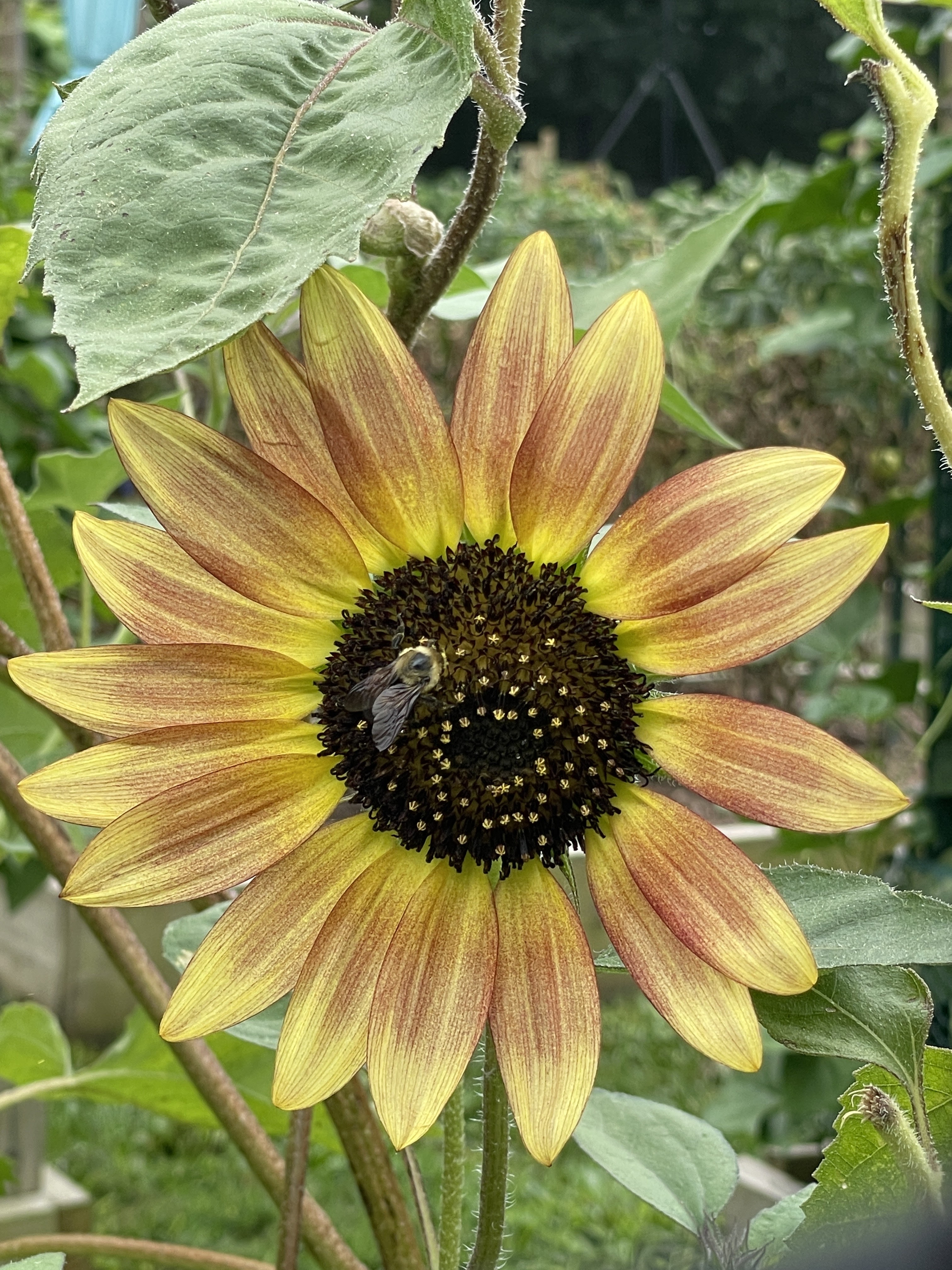
The way the painted sunflower bows
her head under the weight of the bumblebee
and the tickseed heads bristle with hyphenated seeds
that will scatter their blessings over 
the living earth
     and prepare a table before the goldfinch
        in the presence of those who treasure her

The way September’s grasshopper
rasps his way from ditches to gravel roads
his battered wings extolling his travels even as
newborn monarchs iron their wings
     under a radiant, dog-summer sun
          and shadows with edges like knives

The way the redbud leaves dance–
a line in the canopy shifting green to citrine
affirming the beauty of repair, healing, and resilience
like a vein of gold repairing a broken pot
      made more beautiful
            for the continued life it offers

is the way prayer rises and falls


-- This was first published at Episcopal Journal's Speaking to the Soul on September 8, 2022.

Thursday, September 1, 2022

Praise Song at Dawn: Speaking to the Soul for September 1, 2022


Loving Creator,
we rise from our rest to sing your praise,
joining the world You have made holy
through your hands, O God.

The coyotes are back in their dens,
after antagonizing the farm dogs all night;
the barred owls have paused their conversation
under the lacy veil of heaven at sun rise;
katydid, tree frog, and cricket have raised their song
and filled the night with the throb of their praise:
now it is time for us to lift our hearts
and join in the love song of the Earth for our Maker.

Almighty One, this moment is your gift to us, too:
let us use it to center ourselves in your grace.
Let us in our prayer give thanks
for all your blessings to us,
especially this fragile Earth:
may we seek to mend and heal
the frayed cords that bind us to all creation,
and see with new eyes the beauty and completeness
in a drop of rain or sparkle of dew.

The Earth beneath our feet
is your gift to all that lives,
to animal, tree, and stream: all creation is holy.
May we care for each other with tenderness and unity,
walking in the healing path that Jesus invites us to follow.
Tune our hearts to always hear
the echo of our Savior’s laughter and empathy
through the air that still carries the imprint
of his breath and blessing.

Spirit of the Living God,
spread your wings over us
that we may be strengthened to joyfully greet this day,
and grant your peace to all for whom we pray.

Amen.


-- Leslie Barnes Scoopmire. This was first published at Episcopal Journal's Speaking to the Soul on September 1, 2022.

Thursday, August 25, 2022

Guests, Not Hosts: Speaking to the Soul for August 25, 2022


In the beginning, 
our very first story about ourselves ends
with the reminder we were born hungry,
body and soul:

On the day before God rested, at the dawn
of time, God granted the newborn humanity
every herb and fruit tree for our food,
sprung from the same soil
as we were. God invites us all
to a seat at the wedding table of creation-
creation we are bound to
creation we are bound to care for,
into which we ourselves are woven
as a part of the whole. There is
one table, and it is the altar
and sacred precincts
of life itself, insisting on our unity
in shared need for nourishment.

And so it is that we are reminded
in our body’s hunger, and by our food,
from the juiciest boredom-plucked berry
and truffles worth their weight in gold,
to bologna with spelled-out first and second names,
that all the sustenance we receive
is provided from this fragile planet
by God’s tender loving-kindness.

And so it is the soul’s hunger
draws us around God’s holy table
for a foretaste of heaven,
bearing our offerings from God’s creation
formed by human hands, yes,
but sacrament at the invocation
of the finger of God in our midst.
It’s a wonder
our hair doesn’t stand on end.

We are fed
not through our words
but by holy gift
that calls us into God’s own unity.

You can have communion,
or you can have competition,
but not both.
We share with each other
what is not ours to give
or take away.

There can be no jostling or jockeying
for the best place at this table, just rejoicing
that all are invited,
that there is room to spare,
that we are guests, not hosts.

-- This was first published at Episcopal Journal's Speaking to the Soul on August 25, 2022.

Saturday, August 20, 2022

The Caryatid Set Free: Sermon for Proper 16C


The first time I eve saw her was in Room 19 of the British Museum, a tentative foot stepping forward. A basket was atop her head, supposedly in imitation of the maidens of Sparta who would dance with baskets on their heads in honor of the goddess “Artemis of the Walnut Tree,” Artemis Karyatis. So these sculptures were called “caryatids.”

Once she and her sisters had stood in formation on the Acropolis. In Greek and Roman architecture these slender maidens were given the job of holding up enormous weights and bearing up under incredible force and pressure as a cross between engineering necessity and artistic detail. Together, they bore the weight of the stone roof of this enormous temple and other huge stone structures. The baskets on their heads served as capitals, and their bodies, draped in graceful tunics called peplos, served as pillars. Six of them stood in formation originally at the Erechtheion.

The idea of depicting young women as bearing this incredibly heavy weight offended me at first sight—it reminded me of the typical instruction to young women in cultures everywhere to “Sit still, shut, up, and look pretty.” From a practical standpoint, it seemed delusional to expect anyone so delicate to bear such weight on top of their heads and slender spines-- especially with such apparent ease, their perfect posture denying the laws of gravity and physics.

More than 2000 years later, the great French sculptor Auguste Rodin created a sculpture protesting the impossibility of the caryatid’s task. His work was entitled Fallen Caryatid Carrying Her Stone. And when you know that he pulled and expanded her figure from a detail in an earlier work of art known as The Gates of Hell, looking upon her becomes even more poignant.

Rodin reveals the pathos and the hidden strength in his sculpture. The maiden has crumpled under the weight she has been expected to carry. She is seated, her head turned to one side resting upon her crossed arms as her left hand still cradles her stone as it rests on the curve of her shoulder and neck. Her feet are both still touching the ground, making it clear that eventually her body was driven straight down by the weight she carried, leaving her to rest upon her hips. Her tunic has fallen off her shoulder and lies pooled upon the one leg bent along the ground.

And her delicate face…. Eyes downcast in exhaustion, sorrow, and heartbreak. She wearily rests against her right wrist crossed over her left bicep. Her shape has been remade from a stately column to a crumpled, box-like frame. Yet she steadfastly, diligently refuses to put down her stone. Perhaps out of shame. Perhaps out of determination that she will soon gather the strength to rise again and resume her lonely duty.

Her unlined, youthful face suggests this is the first time she has fallen—and that she may have fallen, but she has not been crushed. She is bent by the load she has been expected to bear, and yet she is never broken. The Fallen Caryatid is a therefore nonetheless a depiction of the darkness before the dawn, of the reserves that lie beneath the surface of one who once danced as lightly as a shadow when asked only to bear a basket, but who is determined to never surrender when asked to do the impossible.


In my mind, I guess I always associated that fallen caryatid of Rodin’s with that lonely caryatid in the British Museum, missing her five sisters. Caryatids are not meant to be alone. There is absolutely no way they can bear their terrible loads, unless the force, the pressure, the weight is shared. I think of that fallen caryatid, and I think there is another point in Rodin’s: with enough kindred to bear the collective weight, she would never have collapsed. Six caryatids upheld the roof of the Erechtheion. One, alone, cannot.

Most of us have experienced weights too heavy for us to bear alone, burdens that nearly bend us double. And yet, dutifully, we too often refuse to put down our stone, or to seek help to share the load.

In last Sunday’s gospel from Luke 13:10-17, Jesus spots a woman bent double by an unknown weight or source of suffering she has been carrying for 18 years. The fact that the people know how long she has been unable to stand up shows that they have observed her suffering for all that time. And yet no help or cure has been found to help this poor woman find relief. Perhaps her pain and suffering have rendered her invisible—or have caused others to look away because they don’t know what to say, or do, or they see in her situation their own worst fears of illness and mortality brought to life. They perhaps have chosen to look away, even though, like the fallen caryatid, her burden is visible and tragic. And so she has persevered simply because she must, for these 18 long years.

She has been carrying on, refusing to be crushed by her burden, just like the fallen caryatid of Rodin’s.

In our gospel, Jesus looks across the synagogue and sees that unfortunate woman bearing her burden with quiet determination. He sees her, sees the real person disguised by the burden she carries. He sees her as a “daughter of Abraham,” worthy of dignity and relief. And he heals her and relieves of her burden.

Jesus sees us, too, and is our companion and comfort in times of suffering and stress. Some of the burdens that try to bend us double—loneliness, a feeling of disconnection, anxiety, hopelessness—can be alleviated by Christ, especially in the Body of Christ in the world, in his disciples joining together and themselves “seeing” and acknowledging the needs of each other, and of the greater world around us, and joyfully responding to our obligation as people of faith to not just see, but respond, as Jesus does. Others of those burdens can be alleviated by the Body of Christ advocating in the world against injustice, poverty, homelessness, war, and racism. That’s where we, as the Body of Christ, join in his healing, transforming mission.

What burdens have you carried that tried to bend you double? Where do you see others suffering?

Let’s look for ways to share the load, for the sake of each other, and in the name of Jesus.


Preached at the 505 on October 20, 2022 at St. Martin's Episcopal Church, Ellisville, MO.

Thursday, August 18, 2022

The Gardener Asks for Wonder: Speaking to the Soul, August 18, 2022


“Never once in my life did I ask God 
for success or wisdom or power or fame.
I asked for wonder, 

and he gave it to me.” – Abraham Joshua Heschel


Knee-deep in a prie-dieu of compost,
I asked for wonder,
and pledged my attention,
hoping to lose
thought of myself
in the prayer of planting (for
both are acts of hope)—

seedlings sliding like prayer beads
through my hands what was once
a ditch-side rogue’s gallery elevated
to rockstar status in repair of the Earth:
Joe Pye weed, bergamot, Indian
blanket, rue, aster, true blue
wild indigo, lead plant, blazing star,
columbine, Queen Anne’s lace, 
even lowly clover and thistle.
Turn, turn, turn; the time to pluck up is gone;
the time to plant our purpose under heaven.

To feel the thrum of life beneath my feet,
human rooted in humus
as in the beginning--
almost like stumbling across
God perambulating in an evening garden
leaving behind dewy footprints fresh from bestriding
the sea, pacing off its measure in refutation of Job;

To hear the ethereal
music of hillside pine needle overhead
propelled by wind, the choir 
of hummingbird and song sparrow bobbing
on risers of redbud to the overture of offstage thunder.

But now it has
come down to this:

God answers through
a single brave
monarch butterfly
fluttering by, the first
of the season (enticed by
suburban crewcut

lawns surrendered
and sacrificed as altars 
to milkweed), and by the once-
quotidian honeybee delicately
and now heroically paying homage,
sending salvations of salvia and soybeans nodding, merely
feeding a planet…

and we rejoice at the sight, remembering
when we fools thought them 
common
as a comma.

Here is our hope on the wing.


--This was first published at Episcopal Journal's Speaking to the Soul on August 18, 2022.

Thursday, August 11, 2022

Forest Sonnet, Whidbey Island: Speaking to the Soul for August 11, 2022


(For a friend in grief,
for the assurance of resurrection )


Now, no matter, child, the name:
Sorrow's springs are the same.
No mouth had, no nor mind, expressed
What heart heard of, ghost guessed:
It is the blight man was born for,
It is Margaret you mourn for."

     --from “Spring and Fall,” by Gerard Manley Hopkins


Here Sorrow springs and newborn Spring sorrows;
Their grief resolves in fiddleheads tomorrow.
The mournful poet sees the greening leaf
and vaults ahead to autumn's parting grief....

An anticipatory grief, so-called.
Here last year's leaves lie trodden, branch scraped-bald
From winter's remnant grip. But see, as Spring
Flushes first rosy throat, as thrushes sing

God's glory! Still, larks chirruping, skimming
The winds arise from southern vales, brimming
Their blessings upon the restive, waking Earth.
The forest floor will testify that birth

Sings from subsidence, converting death
God's gravid Spirit-- resurrection's breath.


--This was first published at Episcopal Journal's Speaking to the Soul on August 11, 2022.

Sunday, August 7, 2022

Stars and Bars: Sermon for Proper 14C


This weekend, we celebrate the baptism of young Will Ross, the infant son of Sean and Cary, baby brother of Elliott. Baptism is a time of great joy, a time of commitment, of expanding the circle of the community, of welcoming the newest member of the Body of Christ into a life of joy, love, worship, and compassionate service as a disciple of Jesus. Alongside Will and his family and godparents, we commit ourselves once again to renewing our commitment not just to Christ but to each other and to the Ross family. It’s a glorious time of new beginning and of celebrating not just a new life, but the hope, joy, and beauty we image for him and his beloveds throughout his life, and for all his beloveds.

It is, indeed, a glorious time for new beginnings, a time of wonder.

God knows many of us need a good dose of wonder and amazement to bring us light and life. Wonder and amazement helps us see beyond the stresses and distractions that can cause us to forget our belovedness, our rootedness in the kin-dom of God.

We DO live in a time of wonders, after all. Just a couple of weeks ago, on July 11, the James Webb Space Telescope transmitted its first pictures back from Earth from its own spot orbiting the Sun 930,000 miles from Earth. One of the first images it transmitted was of a cloudy area known as “The Cosmic Cliffs” in the Carina Nebula. (1)

The image is dotted with spectacular six-pointed stars against a midnight blue and black backdrop. A gossamer curtain of red, orange, and rust colored clouds hangs across the bottom 2/3 of the image, and hundreds of stars of various sizes shine out of and through the veil. The image practically pulsates with light and life, giving the appearance of movement. And indeed, this is a place where, even better than in Hollywood, stars are born. This area is a veritable star nursery out on the edge of our own Milky Way galaxy about 7600 light-years from Earth.

This incredible photograph immediately brought to mind one of my favorite paintings—The Starry Night, painted by Vincent Van Gogh in 1888. Van Gogh painted this painting in the small town of Saint-Remy de Provence while housed in an asylum there. The sky was the one visible from his east window. He then added a cypress tree on the left edge of the painting, and part of the town only visible from another perspective to anchor the lower part of the painting. And of course, over the town, the stars and the moon pulse and vibrate with a vitality that draws the viewer’s eye directly into painting.

Apparently, I am not the only person who associated these two images in my mind, because someone has actually taken the painting and the image from the telescope and superimposed them upon each other. The result is astonishing. (2)

And come to find out, scientists agree that Van Gogh’s iconic masterpiece, from a period of personal turbulence in his life, also reflects the turbulence of molecular clouds like that in the Carina Nebula, the churning birthplaces of stars. And so, for the first time ever, I am about to quote from Physics magazine in a sermon. As they recount it:


A student at the Australian National University, Canberra, [James] Beattie studies the structure and dynamics of molecular clouds—the birthplaces of stars—whose churning eddies often make him think of the Dutch painting. He recently put that resemblance to the test with help from Neco Kriel, a student at Queensland University of Technology in Australia. Using techniques developed to analyze the patterns of simulated molecular clouds, the duo compared art and reality, finding that both display the same turbulent features. While it may only be a happy coincidence that Van Gogh’s sky contains star-related patterns, the presence of turbulent motifs is common in paintings, likely due to the abundance of turbulent phenomena in our everyday lives. (3)


Looking only with his naked eye—but most importantly, the eye of his imagination, Van Gogh captured not only an evocative representation of his own inner anxiety and hope; he also depicted a quality of the heavens above us that can currently only be seen by use of powerful telescopes. It truly is miraculous!

Here, truly, we have an example of art imitating life. Perhaps we need that reminder. For many of us, after all, we also live in turbulent times. In just the few days since NASA posted that image of the Cosmic Cliffs, the Midwest and Kentucky has been inundated with severe storms and floods, while the West, under its years-long drought, continues to burn and even cause fish kills, all while the reservoirs that make life possible there begin to empty out. We’re still in the midst of the COVID pandemic, washing over us wave after wave after wave. The economy can’t seem to make up its mind as to whether these are the best of times or the worst of times. Turbulence, indeed.

And it is in this situation that perhaps we can hear anew the gospel message Christ gives us in today’s reading from Luke. Sadly, our lectionary skips over the verses in between this week’s and last week’s reading. Because they would help center us even more fully in the message Jesus is giving us, I want to remind you of them, and not just because they include one of the Rev. Shug's favorite images.

Here’s what we missed after last week’s parable of the rich fool:

Jesus said to his disciples, ‘Therefore I tell you, do not worry about your life, what you will eat, or about your body, what you will wear. For life is more than food, and the body more than clothing. Consider the ravens: they neither sow nor reap, they have neither storehouse nor barn, and yet God feeds them. Of how much more value are you than the birds! And can any of you by worrying add a single hour to your span of life? If then you are not able to do so small a thing as that, why do you worry about the rest? Consider the lilies, how they grow: they neither toil nor spin; yet I tell you, even Solomon in all his glory was not clothed like one of these. But if God so clothes the grass of the field, which is alive today and tomorrow is thrown into the oven, how much more will he clothe you—you of little faith! And do not keep striving for what you are to eat and what you are to drink, and do not keep worrying. For it is the nations of the world that strive after all these things, and your Father knows that you need them. Instead, strive for his kingdom, and these things will be given to you as well. (Luke 12:22-31)

As someone who could probably medal in the Olympics of worrying, these verses have always been very helpful to me. The verses we then heard in our gospel reading a few moments ago reinforce this missing passage.

So let’s look at the assigned verses for this week. Once again, like last week, the topic is priorities and the trust that is required to have them in the right place.

One of the great cures for worry and despair, I have found, is action. And here Jesus gives three commands to his followers, that makes that point clear to all of us:

1. Do not be afraid.
2. Sell your possessions and give alms.
3. Be ready for action, with lamps lit for a journey even in the dark.

Remember the classic trio of faith, hope, and love (or charity)? Here they are again! Look at the commands again. In other words:

1. Have faith.
2. Have charity.
3. Have hope for God’s kingdom here on earth.

1. Have faith- do not be afraid. Did you know that the command “Do not be afraid” occurs 67 times in the NRSV version of the Bible, 49 times in the Old Testament alone? Fear prevents us from thinking and seeing reality and instead causes us to react instinctively. Once we are not afraid, we can ACT. Specifically, in this reading, Jesus reminds us of God’s providence and love for us. Following the command not to be afraid, three command verbs are specifically used: sell, give, make. Sell your possessions, give to the poor, make a purse for your REAL treasure—life in God here on earth, which you will have so abundantly you will need a purse for it.

2. Have charity. The action that flows from conquering our fear is to show our love for neighbor, which the kingdom of God will be grounded upon, by taking care of others. That’s what alms are for. Give to those who can give nothing back. Your reward will be from God for putting your priorities and actions in the right place. Once you have faith, act upon that faith by focusing on others, especially the poor. Just as the opposite of fear is faith and trust, the opposite of fear is being openhearted. This involves more than just charity, however, but a total realignment of the values human societies are all-too-often based upon. The foundation of God’s kingdom is justice and generosity.

3. Have hope. Be ready for “the master’s” return—here Jesus is talking about when the kingdom of God will be established here on earth and “he will come to judge the living and the dead.” We do not know when that will happen, but it is clear that we have a part to play in establishing it—we must act to bring it into being. This is another tie to the Hebrews reading, by the way—the audience was despairing that the Parousia—the return of Christ from Heaven discussed in the Baptismal Covenant and the Creeds—had not occurred yet. Thus this gospel reading could be addressed to the same audience there, as well.

Jesus seeks to encourage us in our continuing life of faith—encouraging us to not just grit our way through, to not just endure when times can seem difficult, but to see life, joy, and hope even in the midst of turbulent times.

Van Gogh’s painting can actually help us here, too. In order to create this luminous picture, he chose to creatively arrange the sections of his painting. The town at the bottom was not visible from the vantage point from which he painted—but he added it anyway. And down in the center, so often overlooked, is a glowing white ember of the village church—whose church bells soothed him so often during each day and night. 

But an even more significant choice Van Gogh made is in what he DIDN’T paint into the image—the bars on the window of his room in that asylum. He looked through them, and beyond them, in order to capture the throbbing turbulence and yet also hopefulness of that night sky. As we see from the picture from the Webb Telescope, that turbulence also represents new life, new stars, coming into existence.

We too, can spend our life looking at the bars, or looking at the stars. We can spend our life looking on a darkened town—or we can see the brave, resilient church that shines out day or night, a church that has no idea how much its mere presence alone encourages those who encounter it.

Jesus calls us to faith, to hope, to charity, to look for and embrace the wonders all around us. To embrace the wonder of a new member of the Body of Christ, as we will now do.

Amen.


Preached at the 505 on August 6 and at the 10:30 Holy Baptism on August 7 at St. Martin's Episcopal Church in Ellisville, MO.

Readings:

Citations:

1) Picture of the Cosmic Cliffs from NASA is found at https://www.nasa.gov/image-feature/goddard/2022/nasa-s-webb-reveals-cosmic-cliffs-glittering-landscape-of-star-birth

2) Van Gogh's The Starry Night Combined with the image of the Cosmic Cliffs found at : https://www.reddit.com/r/deepdream/comments/w4d916/starry_starry_night_nasas_cosmic_cliffs_from_the/

3) Article from Physics magazine quoted at https://physics.aps.org/articles/v12/45

Thursday, August 4, 2022

On the Jericho Road: Speaking to the Soul, August 4, 2022

Luke 10:25-37


On the Jericho road his luck ran out.
The air above the beaten track shimmered
and hissed like a snake. One sandal
lay in the center of the road, vanquished—the thieves
had left that, but all else was gone. 
Its forsaken foot curled up into the lip of the ditch,
disembodied. The man laid there,
arms flung wide, like a fledgling who had
fallen to earth; astonishment curtained 
his inert mouth. He floated
in a sea of dust, blood
pooling in tracks from his wounds. A buzzard
clasped a crag, sensing promise.


Perhaps the road would bring a savior.

Face toward Jerusalem, the priest 
placed each foot delicately after the other, and then
drew the drape of his robe
across his face at the sight, blanched,
and muttered charms to ward off evil
as he moved to the other side, eyes averted. 
A prayer of thanks rose skyward,
congratulating himself for his own righteousness,
to preserve him from such a fate. So too
the Son of Levi--he clasped his ewer by the handle,
suspicion of ambush and 
contempt seizing his heart like a fist,
edging away on his holy business.

A buzz of flies eddied in his wake.
The buzzard snorted humorlessly 
and shrugged. 
Not long now.

There was no one to see, they thought—
but behind the blue veil of sky
the stars blinked 
and spun in protest.

The sun mounted higher.
A Samaritan approached, 
fresh from shunning by the priest and Levite,
who’d made him walk around them.
But at the sandal he slowed, his donkey
shaking her head, skittish at tang and echo of violence
in her nostrils and ears, at the glare
that glowed off sunburned flesh. 
Her master crouched beside
the discarded sack of a man, 
leaking like a burst wineskin. 
He could still walk away.


                                    “Cursed be
the one who leads the blind
on the road astray, or distorts
the justice and mercy owed a stranger,”
the Samaritan murmured.
The donkey breathed the amens.

A trumpet blare of mercy
echoed in his soul’s chamber; the 
walls of the Samaritan’s heart lay in rubble.

With gentle hands he shifted the donkey’s load until
he found wine and oil,
anointing the wounds 
and cooling the stranger’s brow.

Like a mother, tenderly he drew 
the fevered body to his chest, arms beneath 
neck and knee, and raised his neighbor
from ditch to donkey delicately,
claiming the stranger as his brother, 
whose heartbeat was an obligation, whose face
so closely resembled his own,
and only the buzzard turned a baleful eye,
a grudging witness.


--This was first published at Episcopal Journal's Speaking to the Soul on August 4, 2022.