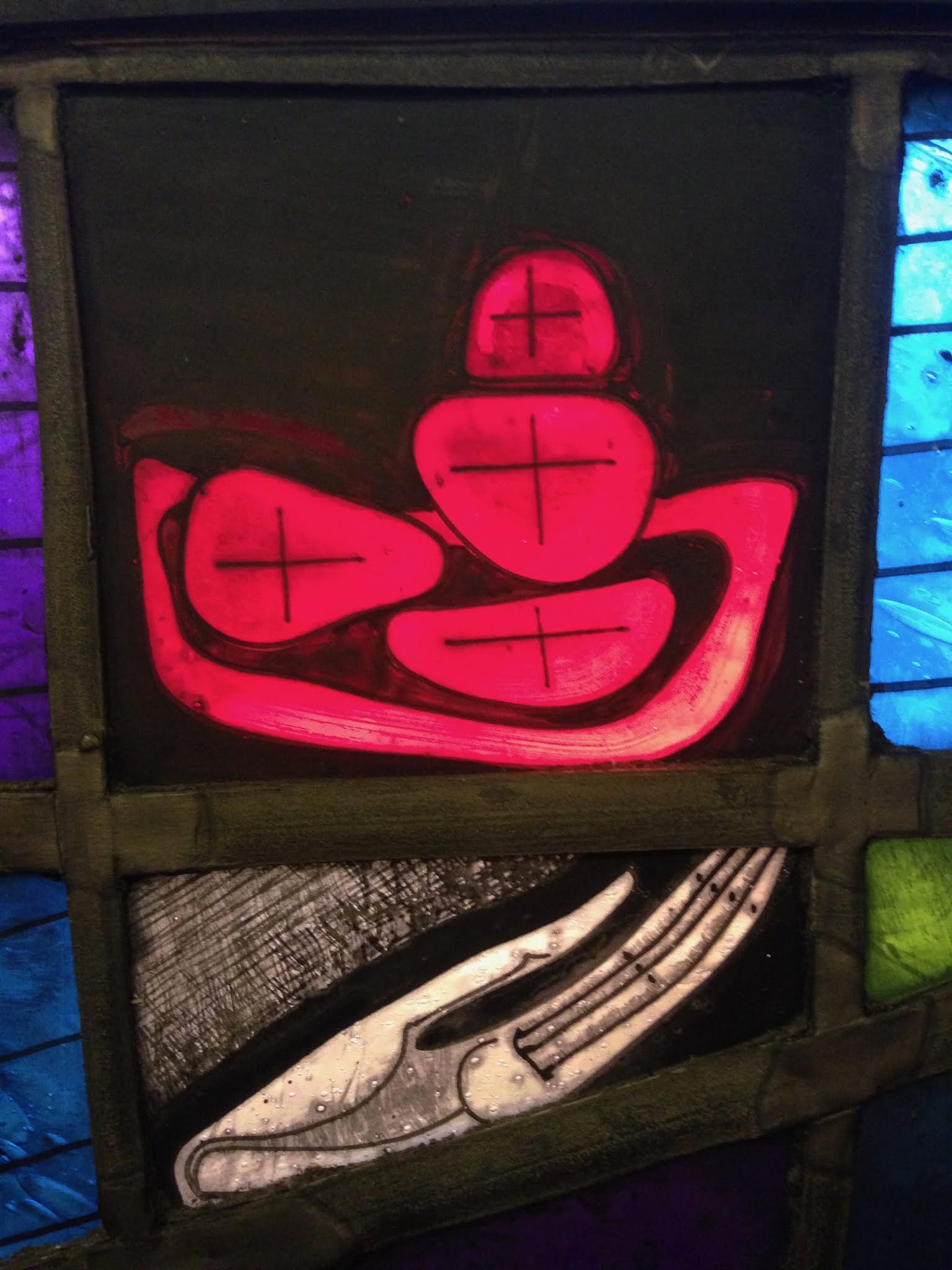
Showing posts with label Eucharist. Show all posts

Sunday, October 15, 2023

No Dress Code: Sermon Proper 23A October 15, 2023


Ah, another Sunday, another gospel reading that seems to portray God as vindictive and violent, and uses religious differences to back that up.

Another Sunday where we misunderstand parables and their symbolism. So let me start out asking these questions:

Do we believe that God is a slave-owning king willing to slaughter anyone who offends him?
Do we believe that scripture portrays God that way, and do we ourselves experience God in that way?
Do we believe that people are FORCED into the kingdom of heaven, measured, and then found wanting?
To be specific, do we believe God would condemn to eternal hell people who do not wear the right clothes to a party to which they were not initially invited? And if so, should we put that on our website in the section for visitors under “What to expect?”

Once, again, NO. And for those of us who are survivors of the kinds of Christianity that DOES promote ideas like that, let me say this: HELL NO.

Jewish New Testament scholar Amy-Jill Levine says this about hell:
“I am among the 78% of American Jews who do not believe in hell. On the other hand, I do like the idea. In my less generous moments, I have delightful thoughts of sentencing people there. Then I stopped, both because I realized such thoughts are ungracious and because I do not believe that eternal pain helps any one. To whether there are postmortem punishments in hell, or rewards in heaven, that I do not want to know personally for a very long time: getting through each day on earth is complicated enough.”[1]

And yet, some of us WANT a God who smites sinners and leaves people we don’t like to roast in hell for all eternity. We especially want that when we ourselves feel victimized or powerless. But I wonder— is this a case of making God in our own image, rather than allowing God to remake us in God’s own image?

We know that this parable has been especially misused by a whole lot of people who like to imagine God to be vindictive and violent to justify their own vindictiveness and violence, which is usually tied to a toxic masculinity and patriarchical model of Christian leadership. This has become, in particular, a deeply dangerous political idea.

To be frank: I am persuaded that this parable has been misused historically when it has been about who is thrown out into the outer darkness, where there is wailing and gnashing of teeth. We gloss over the images of abundance and welcome that are embedded in this story, and in the readings we heard before this gospel in our lectionary. And we may be allowing our resistance to real gospel values to suppress the growth of our spiritual understanding.

First of all, we need to stop believing that we can separate our spiritual lives from our daily lives. We modern Christians keep wanting to separate our daily lives from our spiritual lives—to think about the kingdom of God only on Sundays—and not even every Sunday, since our lives are overscheduled and there are other things to do.

But here’s a truth: your spiritual lives ARE your everyday lives. It is how we live outside these walls that truly reveals our spiritual values and our spiritual compass. And so we are being urged here to understand that we are being called to spiritual renewal.

We overlook the fact that the king invites EVERYONE in, and asks only that they put on the clothing of abundance. I wonder if a more fruitful interpretive lens to hold up to this passage is the universal abundance and universal grace we hear in our first three readings.

In our passage from Isaiah, we hear of rich feast prepared by God for those who live in exile and oppression. Hardly the image of a God who seeks our everlasting torment.

Then, there is the 23rd Psalm. Is there any more beloved and precious depiction of God’s determined love, care, and protection in scripture than this beautiful poem?

And then Paul’s closing thoughts to the Christians at Philippi, urging them to not let a disagreement between two of their members to keep them from embodying the “mind of Christ”—specifically describing the mind of Christ and therefore the mind of God, as being true, honorable, just, pure, pleasing, commendable, excellent, and worthy of praise.

The three parables that we have heard the last three weeks about Jesus’s authority make it clear that those in power had rejected Jesus’s invitation. This third parable makes it clear that Matthew’s community believes that because the leaders and now Jerusalem itself have rejected God’s message sent to them through numerous prophets and finally God’s own son, as last week’s parable made clear, the invitation is going to be extended to people that powerful people usually wouldn’t associate with and denigrated: the tax collectors, the prostitutes, the riffraff, the nobodies, the blind and lame, the people who thought they’d been forgotten. People just like us, just as broken as us, just as in need of grace as us.

When we start trying to exclude people from entering our doors, from sharing in communion with us, from hearing that they are beloved by God, we are behaving EXACTLY as those Jesus is shown here as criticizing.

There is no dress code for God’s kingdom.

When God invites us into the wedding feast, God provides everything that is needed—including the robes. But the robes are not something external. The robes symbolize the inner transformation of living by embodying that same grace and mercy we have received for others.

What if the person who is found without a robe does not symbolize not being the right sort of person by birth or ancestry, but by refusing to be transformed by the banquet? What if that lack of robe is actually a refusal to adopt the mindset of community and gratitude that Jesus makes central to one’s ministry in the world?

Once you’ve come in to the feast, you are expected to put on the garments of love—the same characteristics that Paul lists as necessary to living the faithful life: whatever is true, honorable, just, and pure—and this is about internal purity in the sense of allowing love, not condemnation, to shine out of us.

The Church may bill itself as the representation of God’s banquet—the kingdom of heaven in Matthew’s terminology on earth. That’s beautiful—except for the times when the Church falters in living up to the ideals espoused in the gospel. The fact that we fail as the Church should surprise no one, since the Church is made up of fallible human beings who do not shed their pain, wounds, or sins at the door, but bring them right on in. After all, this community is where the healing can take place. Jesus’s healing of people’s physical ailments throughout scripture was all about restoring people to relationship. And that is necessary work today as much as it was in Jesus’s time.

We as the Church can start to embody the kingdom of heaven rather than mirroring the wounds of our society--IF we are intentional about recognizing that fact, and become very intentional about how we respond to each other and treat each other as we learn this new language of love and life that Jesus’s gospel calls us to. IF we start by constantly examining the way we treat each other here within our communities of faith, and try to change the ways we relate to each other so that we put on those wedding garments.

When we align this parable with the epistle and the gospel, we are led to a reminder that our spiritual life and our daily lives must align within a joyful embodiment of sharing what we have received from God with those around us.

We are led once again to awe at the abundance of God’s mercy and provision in all four of our readings. We are also led to an understanding of the way that God calls us into true community with each other, regardless of our differences. If God can prepare a rich feast for us even while we are inclined to fear and anxiety with our enemies surrounding us, and if God invites EVERYONE to the wedding feast of the kingdom, who are we to harbor hatred, division, or defeatism ESPECIALLY in our spiritual lives OR in our daily lives when we are confronted with the opportunity to toss people out or condemn others?

I have known people throughout my life who were angry, judgmental, and unkind. I have known people who have held others to impossible standards of behavior that they themselves did not meet, but were always searching for some pretext to feel superior to others and to cast others out with curses and condemnation. And all too often, they justified division and cruelty and even aggression in the name of Jesus. And the worst part was, many of these people call themselves “Christian.” And in doing so, they have tarnished the gospel of Christ in the eyes of thousands. We hear actual statements of this from people who have left the church—especially young people—because not only were they not welcomed, but they saw people who claimed to believe in Jesus acting absolutely opposite of Jesus’s example.

What if this parable is meant to remind us that God does not call the perfect, but God asks the called to work toward perfection—and by perfection, I mean those hallmarks of Jesus that actually imitate Jesus: being true, honorable, just, pure, pleasing, commendable, excellent, and worthy of praise, as Paul puts it in our epistle.

Grace is grace because it is not only generous, it is unexpected and unearned. Grace goes against everything for which our human-made systems stand. As Rachel Held Evans writes in our book study book, Searching for Sunday:
The church is positively crawling with people who don’t deserve to be here…starting with me. But the table can transform even our enemies into companions. The table reminds us that, as brothers and sisters adopted into God’s family and invited to God’s banquet, we’re stuck with each other; we’re family.[2]

We all are invited to the banquet, and we bring with us our anger, our flaws, our fears. But just as we are accepted as we are, we are also invited to allow the grace of the sacraments and the community to change us and heal us. Putting on the wedding garment means allowing yourself to be transformed by the miracle of community that the wedding feast is, that we are called to truly re-enact every time we worship together. The point is not to just sit and observe and then go back to our business. The point is to be amazed and transformed by the abundance God places before us in every moment—and to take that into our hearts and souls and share that good news with the world.

Come in to the feast—and let the feast change you. Let the feast change our communities by changing us. And by that, we change the world. No dress code required.

Amen.


Preached at the 505 on October 14 and the 8:30 and 10:30 am Holy Eucharists on October 15, 2023 at St. Martin's Episcopal Church, Ellisville, MO.

Readings:
Isaiah 25:1-9
Psalm 23
Philippians 4:1-9
Matthew 22:1-14


Citations:
[1] Amy-Jill Levine, The Difficult Words of Jesus: A Beginner’s Guide to His Most Perplexing Teachings, p. 101, Kindle edition.
[2] Rachel Held Evans, Searching for Sunday: Loving Leaving, and Finding the Church, p. 152.

Thursday, August 25, 2022

Guests, Not Hosts: Speaking to the Soul for August 25, 2022


In the beginning, 
our very first story about ourselves ends
with the reminder we were born hungry,
body and soul:

On the day before God rested, at the dawn
of time, God granted the newborn humanity
every herb and fruit tree for our food,
sprung from the same soil
as we were. God invites us all
to a seat at the wedding table of creation-
creation we are bound to
creation we are bound to care for,
into which we ourselves are woven
as a part of the whole. There is
one table, and it is the altar
and sacred precincts
of life itself, insisting on our unity
in shared need for nourishment.

And so it is that we are reminded
in our body’s hunger, and by our food,
from the juiciest boredom-plucked berry
and truffles worth their weight in gold,
to bologna with spelled-out first and second names,
that all the sustenance we receive
is provided from this fragile planet
by God’s tender loving-kindness.

And so it is the soul’s hunger
draws us around God’s holy table
for a foretaste of heaven,
bearing our offerings from God’s creation
formed by human hands, yes,
but sacrament at the invocation
of the finger of God in our midst.
It’s a wonder
our hair doesn’t stand on end.

We are fed
not through our words
but by holy gift
that calls us into God’s own unity.

You can have communion,
or you can have competition,
but not both.
We share with each other
what is not ours to give
or take away.

There can be no jostling or jockeying
for the best place at this table, just rejoicing
that all are invited,
that there is room to spare,
that we are guests, not hosts.

-- This was first published at Episcopal Journal's Speaking to the Soul on August 25, 2022.

Thursday, April 14, 2022

Beauty Broken Open: Speaking to the Soul for April 14, 2022


(Maundy Thursday, 2022)

When I was a child, our neighbors across the street, Veta and Myron, were a retired school principal and a retired school counselor. They were generous with their time—inviting us over to play on the swing set they still had up even though their son was long grown and gone. In a rarity for Tulsa, their home sat atop a cellar, and there our neighbor had a collection of rocks, semi-precious stones, and fossils. There were dozens of rose rocks, the State Rock of Oklahoma. He told me about the great inland sea that had once covered the central part of North America, and showed me rocks he had brought back from trips all over the continent. It didn’t take long until I was hooked, and I spent hours over there learning.

One day, he handed me a mud-colored gray-brown orb. It was perfectly round, and surprisingly light—about the size of a croquet ball. I thought it was pretty cool. Then he handed me a hammer. I was confused when he told me to put the rock on the work bench and hit it. But eventually I realized he was serious and did as I was told, not too hard. After a couple of whacks, the thing cracked, and he gave one more expert tap and the orb cracked open. Inside there was a glowing array of light lavender colored crystals. He told me it was a geode. He then let me take my treasure home. I wondered that something so drab and nondescript could be so beautiful when it was broken open.

Tonight, we observe Maundy Thursday—a day when we ourselves are invited to be broken open to the beauty and pathos of these next three holiest of days in the Christian calendar. Our service tonight begins what's known as the Triduum, the great three days leading up to Easter Sunday. In the early church, the Maundy Thursday service always began after sundown, just before Passover will begin for our beloved Jewish kindred after sundown tomorrow.

It is traditional for Christians to meet for a simple meal, engaging in foot washing as a sign of our servanthood, just as Jesus set an example for us, and then have Holy Communion one last time until the Great Vigil. And as we share together this Holy Communion, we are called to re-member that Jesus takes and blesses the bread before the meal itself has really started—he takes it and urges that it be broken and shared among those who sit with him at table for the meal. That bread cannot be shared unless it is broken. It cannot be used for eating the rest of the food. It must be broken in the same way that dawn must be broken, in the same way that geode must be broken in order to allow the beauty within to dazzle our eyes.

Tonight, we are reminded that Jesus gathers us, just as he did those apostles on that night long ago, and offers us the Peace of God, not for our own comfort only, but so that we can share and embody that Peace and Grace to those around us. Tonight we remember that Jesus showed us that the heart of love is service—humble, tender, and compassionate. Jesus shows us in word and action how to live the best life we can have. Tonight Jesus shows that only in breaking ourselves open can we be then filled with eternal life and love.

Tonight may we be willing to be broken open ourselves, broken open to the call of love and community and service to our neighbors and to creation, especially during these next beautiful three days.


This was first published at Episcopal Cafe's Speaking to the Soul on April 14, 2022.

Thursday, August 19, 2021

No Turning Back: Speaking to the Soul for August 19, 2021


John 6:56-69

It was all good when Jesus was passing around the bread and sardines.

It was fine when Jesus was poking his finger into the eye of the elites, the powerful.

But Jesus’s talk about drinking blood and eating flesh bursts through the earliest taboos in Torah. So now, Jesus’s teachings HAVE proved too hard for some of his followers. They have not signed on for this. To drink blood and to eat flesh is unimaginable. They asked for bread, and Jesus seems to be giving them stones. Worse than stones, actually, they think. Jesus speaks matter-of-factly to them about bewildering mysteries when they were asking for another miraculous sign. “Moses,” they said, “laid out feasts in the wilderness. We want bread just like that.” They wanted manna, which they called the bread of angels, but Jesus instead gives them riddles. And so, many leave.

But a few remain—then and now. “Lord, to whom can we go? You have the words of eternal life. We have come to believe and know that you are the Holy One of God.” The ones who leave and the ones who stay do not yet understand that, better than loaves and crumbs, Jesus is offering himself to them—and to us.

Too often, we fall into the silken trap that undergirds our modern world—the stubborn insistent voice that insists that each person is in control of his or her own destiny. Other people will get there first, and there won’t be enough to go around. We are driven by fear of scarcity, fear of the Other. We scramble after manna and ignore the feast Christ offers us.

Jesus, however, reveals a different standard for defining reality. Jesus comes into the world as part of God’s proclamation “God loves, therefore we are.” God freely sends God’s Son into the world as the Incarnate Word through love.

There it is in John 3:16—“ For God so loved the world that he gave his only Son, so that everyone who believes in him may not perish but may have eternal life. Indeed, God did not send the Son into the world to condemn the world, but in order that the world might be saved through him.”

Jesus is the sign and representation, the icon of God’s love for the world, love that feeds and sustains real life, not just existence. The is no turning back from an embrace that pure, that holy.


This was first published at Episcopal Cafe's Speaking to the Soul on August 19, 2021.


Thursday, April 1, 2021

Broken Open: Sermon for Maundy Thursday


When I was a child, our neighbors across the street, Veta and Myron, were a retired school principal and a retired school counselor. They were generous with their time—inviting us over to play on the swing set they still had up even though their son was long grown and gone. In a rarity for Tulsa, their home sat atop a cellar, and there our neighbor had a collection of rocks, semi-precious stones, and fossils. There were dozens of rose rocks, the State Rock of Oklahoma. He told me about the great inland sea that had once covered the central part of North America, and showed me rocks he had brought back from trips all over the continent. It didn’t take long until I was hooked, and I spent hours over there learning.

One day, he handed me a mud-colored gray-brown orb. It was perfectly round, and surprisingly light—about the size of a croquet ball. I thought it was pretty cool. Then he handed me a hammer. I was confused when he told me to put the rock on the work bench and hit it. But eventually I realized he was serious and did as I was told, not too hard. After a couple of whacks, the thing cracked, and he gave one more expert tap and the orb cracked open. Inside there was a glowing array of light lavender colored crystals. He told me it was a geode. He then let me take my treasure home. I wondered that something so drab and nondescript could be so beautiful when it was broken open.

Tonight, we ourselves are invited to be broken open to the beauty and pathos of these next three days. Our service tonight begins what's known as the Triduum, the great three days leading up to Easter Sunday. In the early church, the Maundy Thursday service always began after sundown, just as Passover begins after sundown right around this time. It is traditional for Christians to meet for a simple meal, engaging foot washing to as a sign of their servant hood just as Jesus set an example in the common gospel reading from the book of John, and then have Holy Communion one last time until the Great Vigil. At the end of the Monday Thursday service, it is customary to read Psalm 22, that great Psalm of lamentation whose first verse was quoted by Jesus upon the cross, while all decoration in the church is removed as the lights grow dimmer and dimmer. The maundy Thursday service traditionally ends with a simple washing of the altar and it's an extinguishing of the Tabernacle light and utter darkness.

Tomorrow then, we will hear again the Passion narrative, and we will also be led through the stations of the Cross. But tonight, we celebrate the gift of the Eucharist to us.

In his book Being Christian, former Archbishop of Canterbury Rowan Williams focuses first upon the Eucharist as being about hospitality and welcome. Doctor Williams points out that stories of Jesus hosting friends and being hosted by the most unlikely people abound in the gospels:

“…Jesus is not only someone who exercises hospitality; He draws out hospitality from others. By his welcome he makes other people capable of welcoming. And that wonderful alternation in the gospels between Jesus giving hospitality and receiving hospitality shows us something absolutely essential about the Eucharist. We are the guests of Jesus. We are there because he asks us, and because he wants our company. At the same time we are set free to invite Jesus into our lives and literally to receive him into our bodies in the Eucharist…. This giving and receiving of welcome … is the actual visible way in which [Jesus] engages in remaking a community. Who are the real people of God now? The ones who accept Jesus invitation…. The meals that Jesus shares in his ministry are the way in which he begins to re-create a community, to lay the foundations for rethinking what the words ‘the people of God’ mean.”

It cannot be emphasized enough that in the ancient world the sharing of a meal was fraught with symbolic meaning. Sharing a meal together conveyed status, obligation, and patronage. Meals demonstrated who was out, and who was in, and were governed by rules about cleanliness, attire, and seating order, much like you see in movies about 18th century and 19th century England like Downton Abbey. In welcoming people to his table, and in the people came along with him when he sat down at someone else’s table, Jesus continually shocked the sensibilities of proper citizens. when you stop and think about it, meals are centerpieces of Jesus's teachings in the gospel -- it's amazing how often food is involved near one of his discourses.

Jesus takes and blesses the bread before the meal itself has really started—he takes it and urges that it be broken and shared among those who sit with him at table for the meal. That bread cannot be shared unless it is broken. It cannot be used for eating the rest of the food. It must be broken in the same way that dawn must be broken.

Jesus is preparing them for that day when his body will be broken—both his own human body, strong and young and resilient, and the body of his followers who, except for the women, will scatter and run for cover in literally what is just a few hours’ time. And once that body will break, there we will be reminded that as much as we talk about the presence of God, we also talk about God’s absence—symbolically. I don’t mean that God is ever really apart from us. But for all that we want to claim that God is in control of everything—especially when things go bad, when the test results come back positive and the diagnosis is sobering, when the loved one departs and the relationship ends, when the wheels on the rain-slick road scrabble and whine as they try to maintain their grip on the road—there are also plenty of times when life throws us upon our own resources and we are expected to use what we have learned from Jesus to decide for ourselves which road we are going to take. Freedom is intrinsic to the human life, and sometimes, that leads to joy and sometimes that leads to pain.

As the great Christian writer Henri Nouwen once noted, “The great temptation of the ministry is to celebrate only the presence of the Lord while forgetting his absence … As we become aware of his absence we discover his presence, and as we realized that he left us we also come to know that he did not leave us alone.
” Justo Gonzalez notes that Jesus tells parables sometimes depicting God’s absence, often about stewardship, such as the Parable of the Tenants or the Parable of the Dishonest Steward. These Gonzalez calls “Parables of Absence” because they are meant to provoke us to consider what we will do with our freedom when our discipleship will cost us something—either money, or the chance for revenge or he effort it takes to love someone rather than ignore them and push them away from us, denying their shared humanity with us so that we may stay safely immune from the demand of community that is at the heart of Jesus’s Gospel.

The main elements of the eucharist are bread, wine, and water. We ourselves bring forward the bread and the wine. The water reminds us of our baptism, in a way, and it comes from the earth. It is given in nature, and we are called to protect it and make sure it is available for all. But the bread and wine point to human contribution to this sacred mystery. Baptismal water points toward the grace of God, given as a free gift; but the bread and the wine Remind us of the stewardship that we were all called to share. God gives us wheat and grapes, but human labor turns them into bread and wine. And so God gives and we give and together we share in helping to bring about the Kingdom of God. Being a Christian calls us to break open ourselves and share in ways that threaten to remake the world. It’s a perilous calling we hear—one that will cost Jesus his very life. At least for a while.

This is our second Holy Week under pandemic. In this time of separation, isolation, and distancing that still continues, we are reminded more than ever that Jesus inaugurated the Eucharist as a sign and symbol of the importance of unity and community. As many of us have had to fast from Eucharist for much of this year, it is more important now than ever to commemorate the giving of the Holy Communion to us for our strengthening as one fellowship in Christ. And God knows many of us are weary of the precautions that are required to starve this pandemic of victims. But now is not the time to surrender our efforts to keep each other safe, and remembering the gift of communion can help renew our resolve to put the welfare of those around us among our own vanity and self-centeredness..

And so, as we consider on this night the demands of community upon ourselves, the very real obligation toward each other and even toward imperfect people that we do not know who are nonetheless fellow children of God, as we are called to focus our eyes at the passing crowd and see in each face a specific beloved of God and therefore a person whose well-being is our concern because they sit right here next to us at the table, as we sit here at this universal table, we are being called upon to see how we would react once theory becomes reality. Are we going to move from sitting back on our couches and enjoying the feast to taking off our outer garments and putting on an apron and serving everyone? Are we going to kneel down and wash and care for the calloused, scarred, marred, imperfect feet of strangers as the humble servants we are called to be?

Tonight, we remember that Jesus gathers us just as he did those apostles on that night long ago, and offers us the Peace of God, not for our own comfort only, but so that we can share and embody that Peace and Grace to those around us. Tonight we remember that Jesus showed us that the heart of love is service—humble, tender, and compassionate. Jesus shows us in word and action how to live the best life we can have. Tonight Jesus shows that only in breaking ourselves open can we be then filled with eternal life and love.

From this good earth, and the work of human hands we come as both guest and host, we offer and awe receive until we are reminded that it is all one--- giving and receiving, loving and being loved, living and making a difference in the world around us. We are drawn here around one table.

This is sacrament: a making holy of ourselves regardless of place, rank or time. And tonight we will be called to remember the grace of the sacrament of Holy Communion that we received as a gift of Jesus even before his Passion, death, and resurrection. We were given this gift for our benefit, and for the benefit and service of the entire world—no exceptions.

May we also be broken open, like that bread, and used to bless the world.

Amen.

Preached at the 8 pm Maundy Thursday service online and limited in person in time of coronavirus restriction.

Readings:


The Feast of the Everlasting Mercy: Speaking to the Soul, April 1, 2021


Maundy Thursday

We have entered the second pandemic Holy Week. Tonight we will embrace the sacred mysteries of the Triduum. This year, knowing a bit better what to expect, I felt we could not manage the Maundy Thursday foot washing, so are instead turning to the alternative gospel provided in the Book of Common Prayer: Luke 22:14-30. This passage focuses on the institution of the Holy Eucharist.

During this continuing time of isolation, we are reminded more than ever that Jesus inaugurated the Eucharist as a sign of unity and community. So many of us have had to fast from Eucharist for this past year, making it even more important to commemorate the gift of the Holy Communion as a means of strengthening fellowship in Christ. And God knows, many of us are weary of the precautions that are required to starve this pandemic of vicitms, but now is not the time to surrender our efforts to keep each other safe. Perhaps a reminder of the gift of communion will help renew our flagging resolve.

Communion is a radical act to remake the social order, and to draw us together toward each other and toward God without respect to ANY differences. We are reminded of this in the gospel passage, when, amazingly, a disagreement breaks out among the disciples right after they have participated in this sacred fellowship with Christ. Jesus says, “The kings of the Gentiles lord it over them; and those in authority over them are called benefactors. But not so with you; rather the greatest among you must become like the youngest, and the leader like one who serves.”

This is sacrament: a making holy of ourselves regardless of place, rank or time. And tonight we will be called to remember the grace of the sacrament of Holy Communion that we received as a gift of Jesus even before his Passion, death, and resurrection. We were given this gift for our benefit, and for the benefit and service of the entire world—no exceptions.

What we see in the scene from Luke is that Jesus shared with his apostles the meal, and the bread and the wine—and at first all the disciples can think about is who if the greatest and most powerful among them. Likewise, in 1st Corinthians, the same letter in which Paul describes the Eucharist, Paul is forces to chastise the church there for attempting to use the agape meal and the Eucharist as ways to “Lord it over each other.” The Eucharist is meant to bring us into one body and instill us with one spirit- the spirit of fellowship and redemption. Thus, on Maundy Thursday, we—together, as a community of faithful seekers– memorialize the gift of the Eucharist, and the gift of self-denying servanthood to others that provides the entryway into the Three Days.

The Maundy Thursday liturgy moves us from a celebration of servanthood to, as in the conversion scene in John Masefield’s great poem of redemption and repentance, “The Everlasting Mercy.” Written in 1911, the poem begins by bluntly depicting its main character and narrator Saul Kane as a drunk, a cheat, a liar, a person who used people without conscience, and it did it so forthrightly that some critics called the poem “filth.” Yet even as Saul Kane loathes himself and those around him, he experiences a conversion that reorients him from selfish debauchery to wonder, awe, and gratitude at the love and presence of Christ in his life. He sees Christian symbolism in a simple gate to a field, the furrows. He feels clearly the presence of Christ alongside himself and everyone, even the farmer named Callow trudging dutifully behind his team of horses pulling the plow. The poem ends with a plea to Jesus to plow his heart as thoroughly as Callow and his team are preparing the fallow field. Saul kneels in the mud, his heart open to God, and entreats Jesus to making him a fertile field in God’s kingdom:

O Christ who holds the open gate,

O Christ who drives the furrow straight,

O Christ, the plough, O Christ, the laughter

Of holy white birds flying after,

Lo, all my heart’s field red and torn,

And Thou wilt bring the young green corn,

The young green corn divinely springing,

The young green corn forever singing;

And when the field is fresh and fair

Thy blessèd feet shall glitter there,

And we will walk the weeded field,

And tell the holden harvests’s yield,

The corn that makes the holy bread

By which the soul of man is fed,

The holy bread, the food unpriced,

Thy everlasting mercy, Christ.

— John Masefield, from “The Everlasting Mercy”

Saul is converted from an angry misanthrope to a transformative certainty of his interconnectedness with all his fellow-townspeople, many of whom he once held in contempt, as well as with creation as a whole.

As we gather together on Maundy Thursday, even if virtually, may we too see our lives as blessing, as reflected in our relationship with each other and with God through the mediation of the gospel of love Jesus brings to us. Awed and grateful, may we take and present the gifts of bread and wine, gifts that, as the liturgy reminds us, “earth has formed and human hands have made.” May we think of the young green wheat singing in the field, gathered and made into the tangible proof of Christ’s everlasting mercy as it is blessed and shared from the altar. As it is made into the stuff of redemption and reconciliation, may we too become the servants of Christ’s gospel. And may we join in the song of gratitude. Together.

Thus encouraged and fed, may we seek to serve each other, especially in this time of pandemic, as the highest use of our precious lives, embodying Christ’s love for the life of our neighbors.


This was first published at Episcopal Cafe's Speaking to the Soul, Maundy Thursday, April 1, 2021.

Tuesday, July 30, 2019

Prayer, day 2374


Lord Jesus Christ, we kneel before You in thanks for this day.
Forgive us our sins, O God, we humbly pray,
and guide us into new pathways of peace and mercy
for your love's sake.
Bring us into a new fellowship of faith and hope,
and drive far from us all division and fear.
You, Lord, bid us sit down and eat:
open our eyes to see your abundant blessings all around us.
As you multiplied the loaves and fishes
to feed the multitudes,
feed us with your grace and peace,
satisfying our souls.
Pour out your Spirit upon us, O God,
that we may reflect the light of love and healing
into the darkest corners of the world.
We turn to You, O Holy One,
for your healing touch:
place the balm of your blessing upon all who call upon You.

Amen.

Wednesday, June 26, 2019

Prayer 2340: In Remembrance of Jesus


Lord Jesus Christ,
we praise and bless
You, knowing your encompassing embrace around us.
Draw us into the joy of the Holy Trinity,
that we may make community and empathy
the heart of our expression of our devotion to You.

You offered yourself to us as a model and a teacher,
and you feed us body and soul
that we may be strengthened and heartened
to do your healing work whereever there is need.

In remembrance of You, O Savior,
let us welcome the refugee and the outcast
as You broke bread with all people.
In remembrance of You, O Savior,
let us denounce hatred and cruelty,
defying tyranny as You did,
and boldly embody the law of mercy and compassion You taught.
In remembrance of You, O Savior,
may we be builders of community,
proclaiming our kinship with the least of all
in the eyes of the world,
knowing that all are beloved in your sight.

Abundant One, Source of All Goodness,
create within us clean hearts and steadfast devotion
to be your people in the world.
Spread the mantle of your mercy
over all who call upon You, O God,
and pour out your blessing on those we now name.

Amen.

Saturday, June 22, 2019

Prayer 2336


Come Holy One,
fill us with joy as
we gather before You,
and accept our praises
as we raise them on high.

Give us the wisdom
to examine our lives, Beloved Savior,
and the will to persevere
as your disciples,
casting off our weariness
after being fed by your Word.

Give us hearts
open to self-sacrifice and integrity;
let us engage your ministry in the world,
O God of Hope.

Bless us and keep us
as the apple of your eye, O Holy One,
and hear the whispered prayers of your people
as we lift our prayers and petitions before You, Lord Christ, 
especially for those we now name.

Amen.

Sunday, May 5, 2019

The Charcoal Fire and Forgiveness: Sermon for Easter 3C


We have a lovely story today in this gospel selection, but I will be honest, during the time I was thinking about this precious gospel passage, I was also mourning the loss of Rachel Held Evans, far too early at the age of 37. Her beautiful, passionate voice helped lead so many people who had been burned by the Church back to being open to belief, and although I never met her, her words and her witness meant so much to me. I was thrilled when, like me, she found her way to the Episcopal Church from the rocky shores of evangelicalism.

Her beautiful writing about the importance of story was something I've been thinking about since the news of her death this morning hit me.

In her last book, she spoke of the importance of story in helping us to find our own meaning in the Bible, regardless of the vastly different culture and circumstances we find ourselves in from the people who produced these texts.

She wrote,

Why do bad things happen to good people? Will evil and death continue to prevail? What does it mean to be chosen by God? Is God faithful? Is God present? Is God good?
Rather than answering these questions in propositions, the Spirit spoke the language of stories, quickening the memories of prophets and the pens of scribes to call a lost and searching people to gather together and remember:
Remember how in the beginning, God put everything in order and made the whole cosmos a temple? Remember how we are created in God's image, as stewards, not slaves? Remember how Adam and Eve disobeyed, how Cain and Abel fought, how all the people of the earth grew so rebellious and cruel that God regretted creating the world in the first place? Remember how one family's faithfulness was enough to save them from the Great Flood?
Remember how God promised an elderly Abraham his descendants would outnumber the stars? Remember how Sarah laughed? Remember how God chose a peopleless nomad, a second-born son, a stuttering runaway, and a little shepherd boy to create, to liberate, and rule a nation? Remember how that nation is named for a man who limped from wrestling with God?
Remember how God saw the suffering of a banished Hagar, the unloved Leah, and the oppressed Hebrew slaves? Remember how Pharaoh's mighty army drowned in the sea?
Remember the desert? Remember the manna? Remember the water from the rock?
Remember how it is our God who said, 'Do not fear, for I have redeemed you; I have called you by name, you are mine" (Isaiah 43:1 NRSV)?
Remember how this God has been faithful? (1)

I thought about God's faithfulness, perhaps especially in the midst of heartbreak and loss, as I though about the story of Peter we heard just now. So how can we view Peter's story?


Peter’s head was swirling with thoughts, and his heart was churning with emotion. He needed to get away. So he decided to say he was going fishing—and of course, half of the other apostles immediately jumped in, demanding to come too.

It was torture. All he wanted was to be left alone with his failures—but instead he spent all night listening to the chatter of his fellow-apostles, who didn’t seem to notice he wasn’t his usual, impulsive self.

All he could think of was the red glow of that coal fire, and the reflection of that glow in the faces all around him as he had denied again and again that he knew Jesus. And then the rooster had crowed, and his heart had sunk like a stone, and he had run away.

He would never forgive himself.

Jesus had made a terrible mistake in claiming that he could be the head of the group, the leader of the apostles. He couldn’t continue Jesus’s work in proclaiming the good news of Jesus! He couldn’t even stand up for what he believed standing on a side street with a bunch of strangers.

Dawn came and, on top of having to endure PEOPLE all night long in that little boat, they hadn’t caught a damn’ thing. It was hot, and it was still, and the beer had run out a long time ago. It was the perfect combination of conditions for someone determined to be miserable, and it almost gave Peter a grim, black sense of satisfaction.

Then, just about dawn, some guy on the shore had started calling out advice—and if there’s one thing a fisherman can’t stand, it’s some yahoo giving advice from the comfort of shore. “Cast your net on the right side,” the stranger had called. Oh, sure, THAT must be the problem.

But they hauled the nets up, sorted and rolled them, and then cast them on the right side of the boat. For a moment, the nets just sunk out of view into the gloom. And then, when they started to haul it up, the resistance caused the boat suddenly to tilt to one side. As soon as they had shifted their weight to right it, John had yelled out that the guy on shore was Jesus. He sounded so sure that Peter squinted hard at the stranger—and he recognized the slope of those shoulders.

Peter’s heart leapt to his throat, and he did the only thing he could think of—he made himself presentable and jumped over the side. It seemed like it took just seconds to reach the shore. Dripping, he took the hand Jesus offered as he flopped through the rushes, but then dropped it like it was hot. He saw that coal fire, burning merrily, and remembered. 

He had no right to expect anything other than condemnation. He had denied his Savior three times to save his own neck, and he deserved nothing more than to be cast out.

Instead, he got breakfast. Breakfast, and forgiveness.


One of the things that is most striking is the ordinariness surrounding Jesus’s encounters with his followers after his resurrection in the gospel of John.

Jesus appears so ordinary that no one recognizes him at first. Mary Magdalene thinks he’s the gardener just outside his empty tomb. The other apostles have to see the wounds on his body to recognize him—and some even demand it. And now, here he just shows up on the shore of the Sea of Tiberias, another name for the Sea of Galilee.


And, once again, it is in a simple meal that Jesus communicates so much. Jesus himself has provided the fire, some fish, and the bread—and invites them to contribute too, just as we do to this day in the Eucharist. As the apostles struggle to get the boat to shore dragging their bulging net, some of them remember that time along that same shore that Jesus had fed a multitude with just a few fish and a couple of simple loaves of bread.

So often, we expect to see Jesus surrounded by the miraculous. That expectation fools us, though, and makes us forget this most important fact that Jesus himself alluded to time and again in his teaching: Jesus is almost always found where we least expect him, because he is most present to us as one of us-- the stranger offering us advice we don’t want to hear. The hungry elderly man choosing food over medical care. The homeless person seeking shelter and community who feels she’s been cast away by anyone she has ever loved. The refugees fleeing the only home they’ve ever wanted for the probably unfriendly shores of a foreign land where they may never be accepted.

Jesus’s parable of the king judging the sheep and the goats in Matthew 25 makes it clear that Jesus is among us, and that’s why we keep missing him so much. We don’t expect to see him in the stranger who says unexpected things. We don’t expect our work as disciples to be doing the boring dirty work of putting down our nets around the lost, the forsaken, the broken, the hurting, the desperate. But we are wrong in that.

I just returned from two days in our nation’s capitol, meeting with faith leaders and political leaders across the spectrum to talk about the importance of humanitarian assistance both at home and abroad in eliminating hunger, malnutrition and lack of medical care to the most vulnerable populations among us. It was thrilling to hear people of all stripes commit to supporting concrete action in providing assistance in the holy work of peace, compassion, and generosity that reflect our values in the world. In our Christian tradition, the words of Matthew 25:37-40: “Then those who are righteous will ask him, “Lord, when did we see you hungry and feed you, or thirsty and gave you a drink?’… Then he will answer, ‘I assure you that when you have done it for one of the least of these brothers and sisters of mine, you have done it for me.’” Blessings are only truly blessings if they are shared.

In my free time, one of the blessings of this trip was to be able to spend some time in meditation and prayer at the Washington National Cathedral, one of my favorite holy places. Besides sitting near the Space Window, which contains an actual moon rock, I spent some time praying noonday prayer in the Chapel of the Resurrection in the lower level of the Cathedral for two people hovering on the edge of this life, one of whom I never actually met.

This chapel features beautiful mosaics along the walls which depict scenes from the resurrection, and so it is the perfect place to be during our glorious 50 Days of Easter, since many of the scenes depicted there are from our gospel readings in John during this season. Tonight’s gospel was one of the featured scenes there. The mosaic along the front wall of the chapel depicts the scene we just heard described, with the risen Jesus is standing on the shore of the Sea of Tiberias pulling up their bulging nets, filled with every kind of fish—the net filled, straining, but not breaking.

Those nets have been empty all night—and they remind me of the growing desperation that many proclaim as the number of people who profess faith in God and who attend religious services continues to shrink. Empty nets, empty pews.

If our nets are empty, perhaps it’s because we are putting them down in the wrong place. Perhaps we need to remember to cast our nets down where the fish are. No longer can we expect the fish to swim right up to our boat and hop in. And really, was that ever how it was, or just how we’ve thought it was?

That scene is a reminder to all of us to put our nets down where the need is the greatest. And be willing to joyfully take part in the work of discipleship-- the reason why we're here in the first place, really. We're reminded of that at the end of our gospel, because the reading ends with two simple words: “Follow me.” Simple, but not easy, as Peter and the apostles and as you and me all know.

As we continue with our celebration of Easter this weekend, which will include another joyful baptism tomorrow, I hope you take some time to pray about where God is asking us, as both individuals and as this parish and as this diocese, to cast our nets. And that we can all then be bold enough to cast those nets far and wide, moving from invitation to action. I pray that you listen and respond to those two simple words as they are specifically directed at you in your life.

I pray that you hear the loving voice of Christ urging you to cast your nets wide that you may know the abundant love of God and share it with others, as we all seek to say yes to that call to follow Jesus in faith, empathy, and hopefulness.

Christ is all around us, and it is in the ordinary things that he is most at work in our lives, and he doesn’t always show up wearing a nametag.

Jesus feeds us, and asks us to contribute, to share in the offering that he himself has exemplified. This is what the resurrection life means—the simple acts of fellowship, charity, forgiveness and generosity that bind us together in the name of Jesus, and through which we testify to the world of his great mercy and lovingkindness.

Jesus meets us where we are, but his abundance moves us beyond what we could have ever imagined in ourselves, restoring our faith in ourselves and each other through his faith in us to entrust his work of reconciliation into our unsure hands.

It is in the ordinary that the true miracle of Christ’s love plays itself out for us in each moment, whether of joy or sorrow. We have all been called, like Peter, to proclaim our discipleship—and all of us have had times where we have failed. But not a word of blame is spoken by Jesus to Peter, or to us. Just a simple question: Do you love me? And then he feeds us, body and soul.

Each time Jesus asks, one of Peter’s denials is blotted out. Do you love me? Jesus asks, and he already knows the answer. Then let down your nets, and gather all you can. Draw the world to Jesus in your words and actions, and in your love most of all. Don’t worry about being overwhelmed, or about the net breaking. The net of faith is strong enough to hold everyone. Don’t worry about your own failures and shortcomings and doubts—know that you are beloved of Jesus, beloved, and worthy, and called.

Amen.

Preached at the 505 at St. Martin's Episcopal Church, Ellisville, MO, on May 4, 2019.

Readings:
John 21:1-19

Sources:
(1) Rachel Held Evans, Inspired: Slaying Giants, Walking on Water, and Loving the Bible Again, p. 11.

Thursday, April 18, 2019

God at Our Feet: Homily for Maundy Thursday, 2019


“I give you a new commandment,
that you love one another.
Just as I have loved you,
you also should love one another.
By this everyone will know
that you are my disciples,
if you have love for one another.” (John 13: 34-35)

This is what brings us together—today and every day. Love. It’s there at the start of our gospel reading, too: “Having loved his own who were in the world, he loved them to the end.” Jesus is getting ready to leave his disciples—but he wants to show them what true love is. And he gives them a concrete example that they will never forget.

What is the act Jesus chooses to demonstrate his love for his disciples? Something so humbling that no one would have expected it. Jesus kneels before each one of his disciples, and takes their feet into his hands to wash them. It absolutely surprised the disciples—having Jesus get up at the end of the meal, stripping off his outer garment, tying a towel about his waist, getting the water and the basin. After all, foot washing was usually done before the meal—sponging off the dust that clung to the feet from a day’s journey on the roads and streets. It was also usually done by a slave or by a woman. It was a humble act of servitude.

Yet Jesus reverses the order here—forever linking what we would later call the Eucharist with loving, solicitous service, as symbolized through the foot washing. It’s an important reminder to us, as well, that we must not come to this table “for solace only, and not for strength; for pardon only, and not for renewal,” as one of our own Eucharistic prayers states.

And yes, it makes us as uncomfortable as it did the disciples, this washing of feet. From the time we learn to walk, though, our feet bear the imprint of the habits and the accidents and events of our lives. They get callused where they rub against rough ground, they get misshapen if we wear shoes too small or if we study ballet, they spread wider and ache if we spend too much time on them. They are the very sign of our vulnerability. 

Nonetheless, Jesus takes each one of those feet into his hands, lovingly washing them and drying them, taking his time. Those feet are going to take a variety of paths going out from that place: some are going to go with Jesus to pray. Some are going to go to betray Jesus for silver. Some are going to run away when accused of being a follower of Jesus. Tenderly, Jesus washes his apostles’ feet—even Judas’s, whose act of betrayal gets omitted in the middle of our gospel reading.

In the verses omitted here tonight, Jesus quotes Psalm 41:9- “Even my dear friend in whom I trusted, who ate of my bread, has lifted his heel against me.” I wish they had included the quote from Psalm 41, for, in our reading tonight, we see Jesus taking that same heel of his betrayer and washing it. In washing Judas’s feet alongside the others’, Jesus declares not just his love but his forgiveness for Judas’s betrayal. This is what Jesus means by love. He loved his own until the end—even Judas. 

Throughout Jesus’s ministry, we are reminded over and over again that his kin-dom will challenge and upend all of our human notions of power and authority. And the means by which those notions are challenged is love. The Eucharist and the foot washing are both rooted in that love that is Jesus’s final, enduring commandment to us as his disciples then and now.

And if we look beyond tonight’s liturgy through the remainder of Holy Week, we can see a pattern emerge. The combined narrative of these three days is filled with movement. We begin with Maundy Thursday’s foot-washing, and the stripping of the altar as we remember Jesus’s last meal with his disciples and the setting in motion of his betrayal. Good Friday recalls Jesus’s arrest and crucifixion, and reminds us of the deep symbolism of the cross in our lives as Christians. The Easter Vigil then describes the arc of salvation throughout scripture, and then offers us the first opportunity to proclaim the resurrection. Running through this narrative, pun intended, is a journey through our own devotional growth as disciples.

As I was thinking about this service tonight, I was reminded of the shock that many felt six years ago when Pope Francis washed the feet of twelve prisoners in Rome at a youth detention center. Not all of the young prisoners were Catholic, or even Christian; some were Muslim. But what most shocked some observers were that two of the prisoners were female, and the pope washed their feet ass well. Since the revival of the foot washing tradition in the Roman church in 1959, popes had usually washed only male feet, and usually Catholics—often other priests. However, St. John Paul II washed the feet of homeless boys, although he and his immediate successor later restricted the rite to priests. 

Pope Francis, staying true to his customs from before his papacy, reversed that policy and washed the feet of prisoners—yet in 2013, the shocking part was not the fact that he washed the feet of prisoners, but that two females were among the twelve, and that they had included non-Christians. Yet in responding to criticism about the symbolism of such perceived boundary-violations, Francis’s spokesman was clear that the point of the foot-washing ceremony was as an act of love and service to all.

Jesus calls us to model his acts of humble service in the world. Jesus models his own washing of the disciples’ feet as one that they are called to emulate both individually and as a mark of their community.

How are each of us called to be a servant to others, and how is St. Martin’s called as a community of faithful people to serve those outside our boundaries? These are the questions we are called to continually ask ourselves, testing out our understanding as it evolves over time.

Now some might argue that you can’t command love for another. Some might argue against loving those who are too different from us, or doubt that such a thing could be done at all. But that is exactly what Christ is commanding us to do.

Once again this is where we might start to wish that English had more than just one word for “love.” Because the word Jesus uses to speak of love is not a romantic love, but a self-sacrificing, parental love. Love that pursues even in the face of obstacles. Love that is as real and tangible as the elements of the story we heard tonight—the bread and wine that were a part of the meal as was recounted in the other three gospels, and the water that is used to wash the disciples’ feet. All five senses are engaged: Sight, hearing, taste, smell, touch.

Anglican priest and poet Malcolm Guite appeals to that complete sense-experience of Maundy Thursday in this sonnet:

Here is the source of every sacrament,
The all-transforming presence of the Lord,
Replenishing our every element
Remaking us in his creative Word.
For here the earth herself gives bread and wine,
The air delights to bear his Spirit’s speech,
The fire dances where the candles shine,
The waters cleanse us with His gentle touch.
And here He shows the full extent of love
To us whose love is always incomplete,
In vain we search the heavens high above,
The God of love is kneeling at our feet.
Though we betray Him, though it is the night.
He meets us here and loves us into light.(1)

Jesus loves us into light—and centers his call to love as an appeal to the entire community to disregard barriers and notions of rank and privilege so that the outside world will know we are Christians not by the things we wear or our own claims—but by our love, especially for those outside the margins of our parish or communities. To love, and risk being vulnerable: those are the two components that enable our discipleship.

Jesus teaches us that to serve others is the greatest way to love and serve God. With God’s help, may we also accept the honor and blessing of being cared for with grace. May we not only seek to serve, but to love each other enough to allow them to serve us. May we always remember that we are cleansed not through our own effort but in community with each other, for the redemption of the world. Through the example of our Savior and out Teacher, Jesus, may we shed our fear of being vulnerable, that we may love God and each other fully, and be healed by love. May we join hands and feet and hearts in the sacrament of Holy Communion, to be strengthened and united, giving thanks to God, and interceding through our praise and thanksgiving, for the entire world and its cares.

Amen.


Preached at the 7:00 pm Maundy Thursday service at St. Martin's Episcopal Church, Ellisville, MO on April 18, 2019.

Reading:
John 13:1-17, 31b-35

Sources:
1) The Rev. Dr. Malcolm Guite, "Sonnet for Maundy Thursday" from Sounding the Seasons (2012), also found at https://malcolmguite.wordpress.com/2019/04/18/